I just came out of a Holy Lament meeting with Mirabai Staff and Willow Brook. The Threshold for today was Disillusionment. Mirabai read this poem by Jack Gilbert (accessed at A Brief for the Defense ):
A BRIEF FOR THE DEFENSE
Sorrow everywhere. Slaughter everywhere. If babies are not starving someplace, they are starving somewhere else. With flies in their nostrils. But we enjoy our lives because that’s what God wants. Otherwise the mornings before summer dawn would not be made so fine. The Bengal tiger would not be fashioned so miraculously well. The poor women at the fountain are laughing together between the suffering they have known and the awfulness in their future, smiling and laughing while somebody in the village is very sick. There is laughter every day in the terrible streets of Calcutta, and the women laugh in the cages of Bombay. If we deny our happiness, resist our satisfaction, we lessen the importance of their deprivation. We must risk delight. We can do without pleasure, but not delight. Not enjoyment. We must have the stubbornness to accept our gladness in the ruthless furnace of this world. To make injustice the only measure of our attention is to praise the Devil. If the locomotive of the Lord runs us down, we should give thanks that the end had magnitude. We must admit there will be music despite everything. We stand at the prow again of a small ship anchored late at night in the tiny port looking over to the sleeping island: the waterfront is three shuttered cafés and one naked light burning. To hear the faint sound of oars in the silence as a rowboat comes slowly out and then goes back is truly worth all the years of sorrow that are to come.
Mirabai then gave us the following prompt and 10 minutes to write nonstop:
If I were in charge of the world…
My response:
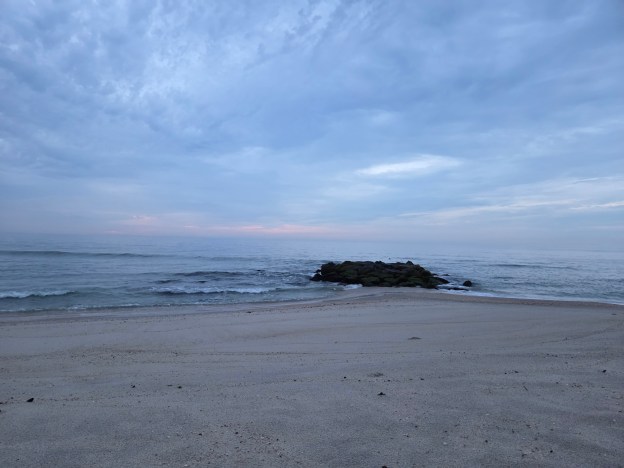
If I were in charge of the world, no children would be hungry…they would laugh and play all day, fully clothed in lovely clothing that fits them perfectly, in shoes that fit comfortably or barefoot on lawns like carpet or smooth beaches of sand and stone. They would find beautiful shells and green and blue smooth seaglass that they later turn into mobiles hanging from the driftwood they also found on the beach – from fishing line that washed up on the shore along with the seaweed and mussel shells.
They would play all day and when night falls they would climb into warm bubble baths to wash off all the salt and sand.
Then they would have a supper of their favorite foods and drink, telling the others all about the joy they felt in their wanderings. And the adults in their lives would listen with open hearts and ears and smile at them with the most loving eyes, letting them know they are perfect just the way they are and no one could love them more.
After cleaning up the dinner things, they would retire with their families to their living rooms and make music, sing songs, tell stories, and read books. And most of all there would be love, unending, unconditional, soul-healing love.
And when they go to bed, their adults tuck them in and hear their prayers, and read some more, and sing them to sleep.
And the adults…the adults who are able…would have meaningful work at a wage that pays their bills and leaves them enough left over to travel the world.


