Category Archives: Uncategorized

YOU’RE SUPPOSED TO BE MY FRIEND

Writing prompt from Mirabai Starr in Holy Lament:

I thought you were my friend…

I’m blank…I thought you were my friend.

Oh. Yeah…

Years ago, in high school, I was angry with a friend. I don’t remember why. But, I sent her the lyrics to “Frozen Smiles” by Graham Nash. It was hurtful and came from a place of pain and anger. The lyrics escape me now… but I remember a line…”you’re supposed to be my friend.”

She was so hurt that she reached out to my boyfriend at the time, or ex-boyfriend, not sure if we were still together at the time. He came to me to talk about it on her behalf. I don’t remember how we resolved it, but I guess we did because at her death in 2020, we’d been friends for almost 50 years. She’s still my best, closest friend. 

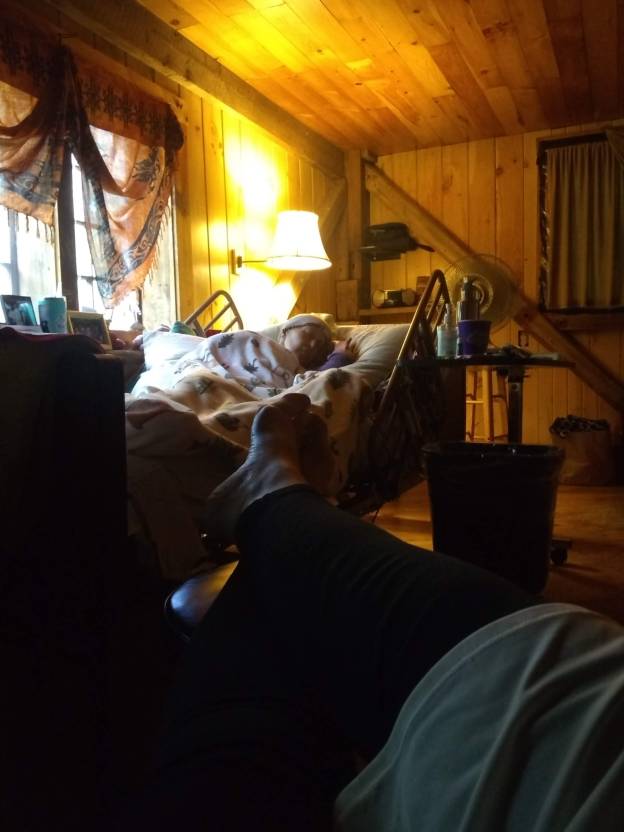
The night before she died, she’d slipped into unconsciousness…a coma? I gave her a Reiki treatment. I felt a lot of heaviness within her that I pulled out. At one point, I was shocked to see another of her friends sitting in the room, watching. I close my eyes when I perform Reiki. Anyway…when I was done, I went outside. She lived in the woods in Maine. I went out into the silent darkness, looked up and threw up my arms. I wanted to scream, to roar, but I didn’t.

She died the next morning.

Frozen Smiles

IF I WERE IN CHARGE OF THE WORLD

I just came out of a Holy Lament meeting with Mirabai Staff and Willow Brook. The Threshold for today was Disillusionment.  Mirabai read this poem by Jack Gilbert (accessed at A Brief for the Defense ):

A BRIEF FOR THE DEFENSE

Sorrow everywhere. Slaughter everywhere. If babies are not starving someplace, they are starving somewhere else. With flies in their nostrils. But we enjoy our lives because that’s what God wants. Otherwise the mornings before summer dawn would not be made so fine. The Bengal tiger would not be fashioned so miraculously well. The poor women at the fountain are laughing together between the suffering they have known and the awfulness in their future, smiling and laughing while somebody in the village is very sick. There is laughter every day in the terrible streets of Calcutta, and the women laugh in the cages of Bombay. If we deny our happiness, resist our satisfaction, we lessen the importance of their deprivation. We must risk delight. We can do without pleasure, but not delight. Not enjoyment. We must have the stubbornness to accept our gladness in the ruthless furnace of this world. To make injustice the only measure of our attention is to praise the Devil. If the locomotive of the Lord runs us down, we should give thanks that the end had magnitude. We must admit there will be music despite everything. We stand at the prow again of a small ship anchored late at night in the tiny port looking over to the sleeping island: the waterfront is three shuttered cafés and one naked light burning. To hear the faint sound of oars in the silence as a rowboat comes slowly out and then goes back is truly worth all the years of sorrow that are to come.

Mirabai then gave us the following prompt and 10 minutes to write nonstop:

If I were in charge of the world…

My response:

If I were in charge of the world, no children would be hungry…they would laugh and play all day, fully clothed in lovely clothing that fits them perfectly, in shoes that fit comfortably or barefoot on lawns like carpet or smooth beaches of sand and stone. They would find beautiful shells and green and blue smooth seaglass that they later turn into mobiles hanging from the driftwood they also found on the beach – from fishing line that washed up on the shore along with the seaweed and mussel shells.

They would play all day and when night falls they would climb into warm bubble baths to wash off all the salt and sand.

Then they would have a supper of their favorite foods and drink, telling the others all about the joy they felt in their wanderings. And the adults in their lives would listen with open hearts and ears and smile at them with the most loving eyes, letting them know they are perfect just the way they are and no one could love them more.

After cleaning up the dinner things, they would retire with their families to their living rooms and make music, sing songs, tell stories, and read books. And most of all there would be love, unending, unconditional, soul-healing love.

And when they go to bed, their adults tuck them in and hear their prayers, and read some more, and sing them to sleep.

And the adults…the adults who are able…would have meaningful work at a wage that pays their bills and leaves them enough left over to travel the world.

HOW DARE YOU?!

I just signed out of a Zoom meeting with Mirabai Starr and Willow Brook, a gathering called The Sacred Art of Grieving. 

Mirabai read a poem by Rumi. I don’t know if this is exactly the same translation…but you’ll get the point.

The grapes of my body 

The grapes of my body can only become wine
After the winemaker tramples me.
I surrender my spirit like grapes to his trampling
So my inmost heart can blaze and dance with joy.
Although the grapes go on weeping blood and sobbing
“I cannot bear any more anguish, any more cruelty”
The trampler stuffs cotton in his ears: “I am not working in ignorance
You can deny me if you want, you have every excuse,
But it is I who am the Master of this Work.
And when through my Passion you reach Perfection,
You will never be done praising my name.”

(This English version is by Andrew Harve, Original Language Persian/Farsi & Turkish)

She then gave us a prompt and time to write. The prompt was: “I surrender”.

Here is what I wrote:

Ugh. My immediate reaction is How Dare You?! How dare you stomp on my heart and call it Love! What is the meaning of this torture? What?! Am I to be grateful that you took my son? That you left me with this broken bleeding heart?! How fucking dare you?!

My heart, mashed and smashed beneath your feet? Do you take pleasure in my brokenness? My weeping and wailing? The complete and utter rending of my heart and soul. The loss of my son. The loss of his future….

MARY UNDERSTANDS

31. GET AWAY FROM IT ALL

  • Visit a foreign country. Go backpacking in the wilderness. Volunteer in the inner city. Spend a weekend at a monastery or nunnery.

CARPE DIEM:

Plan a trip to somewhere far away. Ask a friend to travel with you. (HEALING A PARENT’S GRIEVING HEART: 100 PRACTICAL IDEAS AFTER YOUR CHILD DIES; Alan D. Wolfelt, PhD; 2005)

So…after meditating this afternoon, I picked up Dr. Wolfelt’s book and read the above passage. So…I did it! I went through my emails and found Immaculee Ilibagiza’s email about upcoming pilgrimages. I signed up for one to Medjugorje. It’s a Marian apparition site in Bosnia Herzegovina, the former Yugoslavia. I’ve been wanting to go there for a long time. I’ve been to Knock, Fatima, Lourdes and even an unapproved (by the Catholic Church) site here in New Jersey. 

If anyone understands what it’s like to lose a child, it is Mary of Nazareth, the mother of Jesus. 

Immaculee is a survivor of the Rwandan genocide and author of a number of books, the first of which was “Left to Tell”, her story of survival. I met her years ago when she spoke at a local church here in New Jersey. I hope this will be the first of many trips with her to apparition sites, including Kibeho in Rwanda.

I did not ask a friend to come with me…but I did invite a friend to go for a walk this afternoon.

THE QUESTION

21. PREPARE TO ANSWER “THE QUESTION”

  • “How many children do you have?” What was once an everyday, friendly question is now a loaded gun. (HEALING A PARENT’S GRIEVING HEART: 100 PRACTICAL IDEAS AFTER YOUR CHILD DIES; Alan D. Wolfelt, PhD; 2005)

I remember, shortly after Joseph died, sitting in my therapist’s office, crying, and asking him – when someone asks me how many children do you have, what do I say? I remember him looking at me with the care and compassion he always held. I don’t remember his response.

Now, almost 12 years later, I just reply as though he were still alive. I have four children. If they ask boys? Girls? I answer, two boys and two girls. If they prod further, depending on who they are, why they’re asking, and the context of the conversation, my answers vary. I’ve had people ask what my children do for a living. That’s complicated even with my living children, because not all of them talk to me. But, I have learned that families are, in general, complicated. 

Yes, some underlying anxiety upon being asked the question still remains. I remember being at some sort of function and talking to someone who had asked about children. The conversation went further and I told them about Joseph’s death. When someone else asked the question, she answered, for me, that I had 3 children. I suppose she thought she was being helpful, but I found it offensive.

I WILL SEE YOU AGAIN

20. MOVE TOWARD YOUR GRIEF, NOT AWAY FROM IT 

  • Our society teaches us that emotional pain is to be avoided, not embraced, yet it is only in moving toward our grief that we can be healed.
  • Of course, it’s also necessary to dose yourself with your grief. Sometimes you will need to distract yourself from the pain. But in general, you should feel that you’re moving toward your grief – toward an understanding and acceptance of it. (HEALING A PARENT’S GRIEVING HEART: 100 PRACTICAL IDEAS AFTER YOUR CHILD DIES; Alan D. Wolfelt, PhD; 2005)

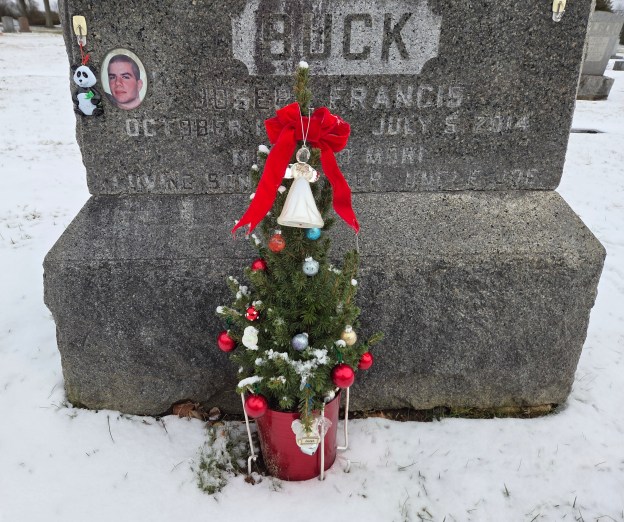
I stopped by the cemetery over the Christmas holidays. Someone had left a little decorated Christmas tree. It was windblown. I straightened it up and smiled. I assume it was left by his dad, or maybe his sister. Someone had also hung a panda ornament from the grave stone. Joseph loved pandas.

I am consciously moving toward my grief, finally. For so long, the trauma of finding him dead, and my guilt as a result, were in the way. I remember that he lived. I am taking time to allow good memories to arise and feel joy in having known him. Yes, he struggled, and I worried about him, but there was so much joy in having had him in my life.

We travelled to Washington, DC, he, his sister and I, to see the baby pandas at the National Zoo when they were kids. I still have the stuffed animals I bought for him there. Recently, my daughter bought supplies for an event at my granddaughter’s high school, and, inexplicably, a toy panda was in the packaging. He finds ways to show us he’s around.

I will be watching something on TV and a memory of him rises up, sometimes, sadly, it’s a scene of someone dying by suicide having used the method he chose. I allow myself the sadness and the tears in remembering. Sitting with them, just with the sadness, not the guilt. Guilt is such a cruel emotion. It can be useful, sure, but sometimes it just wields its blade to cut and hurt. I tell clients, just say, “Hello, Guilt, I see you,” and let it pass. I know how hard that is to do. I will work on giving myself the same grace.

I miss you, Joseph. I wish you would have stayed. Maybe you would have a family now. I would love to see you with your own kids. I think you would have made a wonderful dad. I love you, Son. I will see you again.

“BE ANGRY BUT DO NOT SIN” (Ephesians 4:26)

18. KNOW THAT IT’S OKAY TO FEEL ANGRY

Grieving parents often feel angry – at others whom they perceive caused or contributed to the death, at themselves for letting it happen, at God, even at the child herself for having abandoned them. (HEALING A PARENT’S GRIEVING HEART: 100 PRACTICAL IDEAS AFTER YOUR CHILD DIES; Alan D. Wolfelt, PhD; 2005)

Anger wasn’t one of my feelings. It is not an emotion I am comfortable with. Well, for myself that is. I have no trouble feeling anger at injustice toward other people, but that’s a whole other topic.

It may have crept up here and there. Before Joseph’s death, I had taken him to an appointment with a psychiatrist at a local clinic. He came out saying the doctor told him his diagnosis was “laziness”. THAT pissed me off. Medical professionals, especially in the field of psychiatry, ought to have a better understanding of the people with whom they interact and for whom they prescribe. A little compassion would be appreciated.

I can’t say I was angry about it, but I wondered why my other kids, and their father, didn’t check in on him that day. I had let them all know that I had found packaging from his drug of choice and that I had given him the weekend to find somewhere else to live. It is all too easy and comfortable to take on blame and guilt myself. I wish they had checked in on him. I don’t know that it would have made a difference.

I wish that he would have made a choice to stay. I have smacked his photo on the grave stone and called him a brat, but I don’t feel angry about it, not for long anyway.

I have a difficult relationship with anger. Somewhere, sometime, somehow, I internalized the idea that it is wrong to feel angry. I have seen the pain inflicted by people who just let their anger fly. Anger scares me. (Unless it’s righteous anger, which I experience for others, of course.) If I experience anger for myself, which is rare: and, I try to speak up and out in defense of myself, which is rarer still, I inevitably end up in tears, which is not at all helpful.

I have this awareness, though, that deep within me exists a rage in chains. I don’t know what it is or where it comes from, but it’s there. I wish I could let it out. It’s that Gollum deep inside, that ugly creature I think is me, that if anyone really got to know me they would see.

At some point, in therapy, I became aware that this Gollum is actually a frightened child who feels not good enough. I try to spend time with her, on occasion, and let her know she is loved. 

It’s not easy being me.

Sometime after Joseph’s death, I participated in a meeting at my county’s mental health and addiction services office, a focus group of sorts. They were asking for community input on gaps in services. I told them that there needed to be more long-term residential support for people experiencing co-occurring, mental health and substance use disorders. Joseph had been in rehabs, hospitals, halfways houses…but it was for treatment of one or the other. He needed support for both. I don’t know if that has gotten any better, but I think not.

I worked as a psychiatric screener for a while. I had a guy come in who needed treatment for both. I held him in the unit, with his consent, trying to find an appropriate placement. One day, while I was sent out on another call, management kicked him out, escorted by police. I was angry then! It was run more like a jail than a medical facility. Not long afterward, I found another job. That’s a whole other disappointing story – Partial Hospitalization, Intensive Outpatient program (PHP/IOP).

So, now I’m retired. I guess. I have a hard time admitting it. I take assignments now and then through a company with which I am considered “On Demand”. I’ve also agreed to work in an outpatient private practice one day a week, but no clients yet. Maybe it’s not meant to be. Meanwhile, for the most part, I’m enjoying not working.

(Featured image accessed at https://news.stthomas.edu/publication-article/the-unbearable-sadness-of-being-gollum/)

MULTITUDE OF FEELINGS?

17. EXPECT TO HAVE A MULTITUDE OF FEELINGS

  • Grieving parents don’t just feel sad. They often feel numb, angry, guilty, afraid, regretful, confused, even relieved (in cases of chronic or terminal illness, for example). Sometimes these feelings follow each other within a short period of time or they may occur simultaneously. I often say that grief is not experienced as a single note but as a chord.

CARPE DIEM:

Which grief feeling has surprised you most? Make a point

of talking about this feeling with someone today.

(HEALING A PARENTS’S GRIEVING HEART:

100 PRACTICAL IDEAS AFTER YOUR CHILD DIES;

Alan D. Wolfelt, PhD; 2005)

I suppose the feeling I first felt, upon discovering my deceased son, was horror. I don’t know that I could identify feelings after that, at least not immediately. I was split open. I screamed and screamed. No one heard me.

His body was already cold and stiff, and yet, once I reached the 911 operator – it took several attempts – I obeyed her directions. I cut him down and I performed CPR, listening to the air whistling through his clenched teeth, although I knew it was pointless.

Once the officers arrived, I obeyed their direction. I went into the next room, the dining room, and sat in a chair. I suppose I was hyperventilating. An officer stood over me and kept saying, “Calm down. Calm down.” I looked him in the eye, saying nothing, but thinking, “You’ve got to be fucking kidding me.” And yes, like the memes say…never in the history of someone saying “Calm down” has anyone calmed down.

At some point, I went upstairs, and picked the lock to my bedroom to get in. I had locked it so that my son couldn’t open it and get his medication to overdose. He had made a number of attempts before. Of course, I had locked him out of the house as well, but he managed to get back in and found another method.

I sat on my meditation pillow, on the floor, and began praying the Chaplet of the Divine Mercy, a Catholic prayer practice encouraged for the dead and dying. Another officer came upstairs and asked if there was anyone he could  call for me, to get me out of the house. I said no. I wasn’t leaving the house until my son’s body was removed.

At some point, I made some calls. I called each of my other children, as well as my ex-husband. My eldest asked how he did it and hung up when I told her. My number two child was more supportive. He even called back to check on me. Number three didn’t answer, so I left a message to call me back. My ex didn’t answer. I also left a message for a call back. I called a neighbor for support, no answer there either. Left a message. This was late at night. I’d worked the second shift at a psychiatric children’s home. 

I called my parish church and reached the associate, who assured me that the funeral home would be in touch with them to make arrangements. No offer of support or a visit.

I finally ended up calling my ex-partner, who was at work as a police dispatcher over an hour away. He left work and came to be with me, arriving before all the to-do was over. He took me to his apartment and remained with me throughout the ordeal and years after.

I cried non-stop for a long time, throughout the wake and funeral. 

What was I feeling? I was nothing BUT feeling. Horror, sadness, grief, guilt. And, at some point, relief. The fear of losing him was gone, because he was gone. He had a chronic and, ultimately, terminal illness, bipolar depression.

The guilt was the overarching feeling for many years. This year it will be twelve years. It is finally ebbing, somewhat, so that I am able to mourn. I came across a post on one of the survivors of suicide pages I follow on FaceBook. It said, “I would have saved you if I could.” And that gave me a tremendous sense of peace. Yes, Joseph, I would have saved you if I could. I did not want you to die.

BEING HERE NOW

16. BE AWARE THAT YOUR GRIEF AFFECTS YOUR BODY, HEART, SOCIAL SELF AND SPIRIT.

  • Grief is physically demanding. The body responds to the stress of the encounter and the immune system can weaken. You may be more susceptible to illness and physical discomforts. Grieving parents often describe their grief as a pain in the chest or a physical ache. You will probably also feel sluggish or highly fatigued. Some people call this the “lethargy of grief”.
  • The emotional toll of grief is complex and painful. Mourners often feel many different feelings, and those feelings can shift and blur over time. 
  • Bereavement naturally results in social discomfort. Friends and family often withdraw from mourners, leaving us isolated and unsupported. Mourners often feel out of place in a setting they once felt a part of.
  • Mourners often ask, “Why go on living?” “Will my life have meaning now?” “Where is God in this?” Spiritual questions such as these are natural and necessary but also draining. 
  • All four facets of yourself are under attack. You may feel weak and powerless, especially in the early weeks and months. Only over time will you gain the strength to fight back.

CARPE DIEM: 

If you’ve felt physically affected by your grief, see a doctor this week. Sometimes it’s comforting to receive a clean bill of health. (HEALING A PARENT’S GRIEVING HEART: 100 PRACTICAL IDEAS AFTER YOUR CHILD DIES, Alan D. Wolfelt, PhD, 2005)

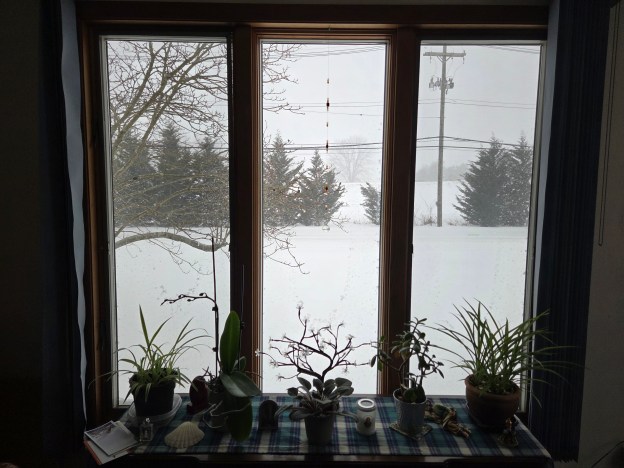
Usually, I just pick a snippet from the page, but today, all of it grabs my attention. It all rings true for me. It’s a snowy day here in the northeastern US. I’m enjoying being in my nice warm home, with a blanket on my lap, and a cup of tea. My kids would laugh about “my nice warm home”. I keep it at 65 when I’m up and 60 when I’m out or in bed.

Grief certainly is physically demanding. It’s a full-body experience. As my rent heart mends back together, I can finally feel the grief and externalize it into mourning. I could always talk about Joseph’s death, but a part of me still didn’t believe it. I remember at the burial site, standing at the foot of his casket. I didn’t sit with the rest of the mourners. I stood opposite the Deacon, who prayed the final prayers at the head of the casket. We looked into each other’s eyes. “May perpetual light shine upon him…And may his soul and the souls of all the faithful departed, through the mercy of God, rest in peace. Amen.” It was all so unreal.

My friend from Maine had driven me to the funeral home where I met my ex-husband, his wife, and our daughters, to make the “final arrangements”. Just as we were leaving to go there, a Deacon from my church and his wife came to the house. I told Deacon Steve and his wife, Lois, that I had called the rectory the night it happened. His response was, “Where was your community?” If only I had called them directly…The priest I spoke with only told me that the funeral home would call them to make arrangements. 

The funeral director was a lovely man, who had also lost a child. Her portrait hangs in the entryway. I was okay while we sat at the desk in his office…or as okay as I could be. I don’t know that I said anything. When we were led into the showroom to choose a casket, I couldn’t enter the room. I backed out and went outside to be with my friend. I don’t remember if I went back in. It was that sense of unreality. That rending between what was and what I accepted. Again, I say that it is only recently that I believe he is really dead…through the process of working through this book and having been to Dr. Wolfelt’s presentation.

I am always in pain, in most of my body. I have been diagnosed with fibromyalgia, which was basically a rule-out of other diseases. I know, and I teach, that we carry our traumas in our bodies. This is the heaviest of the traumas I have experienced. The burden is made greater by my guilt and all the “what ifs” and “if onlys”. I have participated in various grief groups, in-person and virtually. They have all been helpful in one way or another. The suicide survivor groups have probably been the most helpful and I have made friends through them. No one else understands the depth of this particular loss. We see each other socially as well.

Social situations are very difficult for me. I prefer one-on-one get-togethers. Anxiety and a sense of just not fitting in anymore interferes with going to parties, celebrations, and group events, except for with the survivors, who feel the same way and give comfort to each other as a result of this understanding.

Day to day living can seem pointless at times. Heavy. But I have learned to Be Here Now, again, as Baba Dam Rass would say. There is a sacredness in each moment, each breath.

TODAY IS NOT THE DAY

15. CRY

  • Tears are a natural cleansing and healing mechanism. It’s OK to cry. In fact, it’s good to cry when you feel like it. What’s more, tears are a form of mourning. They are sacred! 

CARPE DIEM:  If you feel like it, have a good cry today. Find a safe place to embrace your pain and cry as long and as hard as you want to.  (HEALING A PARENT’S GRIEVING HEART: 100 PRACTICAL IDEAS AFTER YOUR CHILD DIES, Alan D. Wolfelt, PhD, 2005)

I don’t feel like it today. I’m okay. I’m a little tired. Just enjoying being in the house on this cold, damp, dreary day. Doing laundry and a little cleaning. Mostly reading. Some meditating. I’m aware that my heart is healing. It’s only taken eleven plus years. 

The night I found my son, I don’t know if I cried. I remember screaming. My heart, my soul, my very self, split in two. It is only now that I feel some mending happening. I’m coming back to myself, acknowledging that my son is indeed dead and gone. My son. The child I raised. The boy who felt things so strongly. I described him as wearing his nerves, as a child, on the outside of his body. My beautiful boy.

Wednesday was the first anniversary of the death of my mother. Not by suicide, like my son. I do believe she gave up though. She was 87 and a half. She’d survived all the members of her family, except for some in-laws, as well as the loss of her best friend. The last loss, the final straw, was her younger sister. Until the last few days, she continued to be active in her assisted living community. Then she was having difficulty breathing, her pulse-ox was very low, but she wouldn’t keep the oxygen on. 

When my sister called to say she was gone, I was shocked. We’d just gotten her on to hospice services because she was refusing to go to the hospital and she needed more care than the facility could provide for her. I told her it didn’t mean she was going to die, that some people graduate from hospice. (I’d worked as a hospice social worker.) Apparently, she decided otherwise.

I had a Mass celebrated for her yesterday at my parish church. Before Mass, I thought about telling the priest the correct pronunciation of her name, but he was running late and I decided not to interrupt him as he got ready. He mispronounced it. Many people do. Obviously not an English major. A vowel followed by double consonants carries the short sound, no? He said it with the long sound. 

I reposted her eulogy, photos, and stories. I felt guilty when I saw my sister posted, “we miss you”. I don’t miss her. Not really. She wasn’t the easiest person to be around. All my life her anxiety took first priority. I remember, even as a child, trying to manage her anxiety. Once, she left the window by the stove open after she hung out some laundry (NY apartment living). The curtain blew into the flame and caught fire. The flame blew across the window shade and it dropped. I called her, in a monotone, “Mo-om, the curtains are on fire.”  I was maybe 10 years old.

I visited her grave yesterday. Afterward, I went to my sister’s. We went out to lunch and then spent time together at her apartment. I got to see my niece too. It was a lovely visit. We are really just getting to know each other. Enjoy each other. 

We agreed that, growing up, we were just a bunch of people living in the same house. Mom was a switchboard operator when I was young, later a receptionist. She operated that way in life as well. She talked about each of us, her four kids, to each of us. In a way, it kept us separate. I remember, having started communicating directly with my sister. Mom told me something about her; and, when I said I already knew, she was surprised…like how dare I already know that. So…looking back, I think it was intentional. Sad to say.

I always knew anxiety was an issue for her. She started taking Valium, Mother’s Little Helper, in the “60s and continued through old age. Later she had Xanax. She didn’t drink a lot, but she’d hobble to the liquor store down the block from her Senior apartment. She spent some time in 12 Step meetings, Al-Anon Adult Children, and talked about getting the best therapy for $1 (donation).

Everybody loved her. Well, there were a few that told my poor sister she was a saint for dealing with her. She had the major care-taking duties. 

On the anniversary, my daughter, granddaughter and I went out to an Irish pub for dinner. Mom loved all things Irish. We would sometimes take her out to an Irish pub, where she would order a quesadilla. I’m not kidding. 

Now she’s with my son. I hope they’re enjoying each other’s company.