Category Archives: mourning

I WILL SEE YOU AGAIN

20. MOVE TOWARD YOUR GRIEF, NOT AWAY FROM IT 

  • Our society teaches us that emotional pain is to be avoided, not embraced, yet it is only in moving toward our grief that we can be healed.
  • Of course, it’s also necessary to dose yourself with your grief. Sometimes you will need to distract yourself from the pain. But in general, you should feel that you’re moving toward your grief – toward an understanding and acceptance of it. (HEALING A PARENT’S GRIEVING HEART: 100 PRACTICAL IDEAS AFTER YOUR CHILD DIES; Alan D. Wolfelt, PhD; 2005)

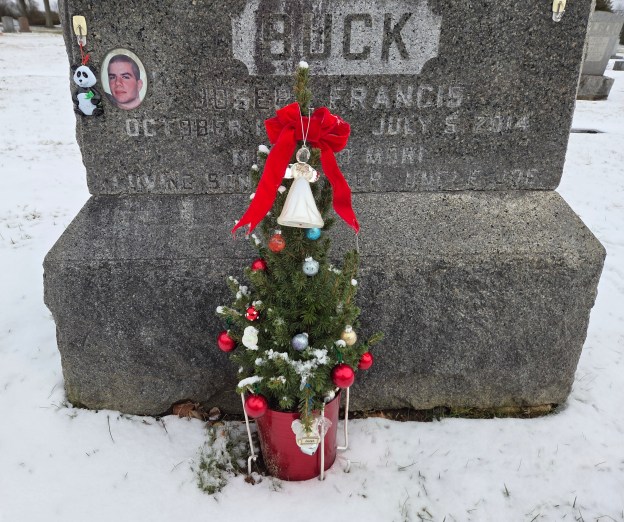
I stopped by the cemetery over the Christmas holidays. Someone had left a little decorated Christmas tree. It was windblown. I straightened it up and smiled. I assume it was left by his dad, or maybe his sister. Someone had also hung a panda ornament from the grave stone. Joseph loved pandas.

I am consciously moving toward my grief, finally. For so long, the trauma of finding him dead, and my guilt as a result, were in the way. I remember that he lived. I am taking time to allow good memories to arise and feel joy in having known him. Yes, he struggled, and I worried about him, but there was so much joy in having had him in my life.

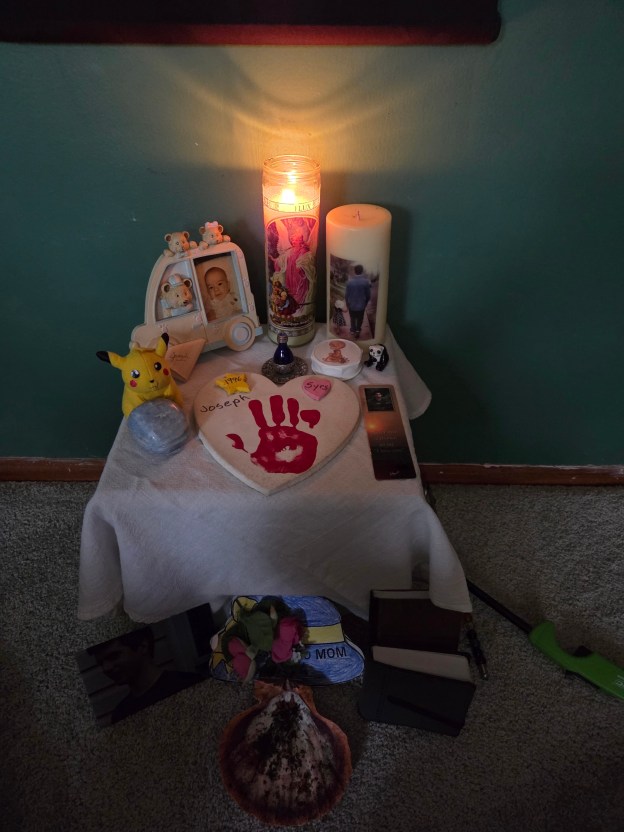
We travelled to Washington, DC, he, his sister and I, to see the baby pandas at the National Zoo when they were kids. I still have the stuffed animals I bought for him there. Recently, my daughter bought supplies for an event at my granddaughter’s high school, and, inexplicably, a toy panda was in the packaging. He finds ways to show us he’s around.

I will be watching something on TV and a memory of him rises up, sometimes, sadly, it’s a scene of someone dying by suicide having used the method he chose. I allow myself the sadness and the tears in remembering. Sitting with them, just with the sadness, not the guilt. Guilt is such a cruel emotion. It can be useful, sure, but sometimes it just wields its blade to cut and hurt. I tell clients, just say, “Hello, Guilt, I see you,” and let it pass. I know how hard that is to do. I will work on giving myself the same grace.

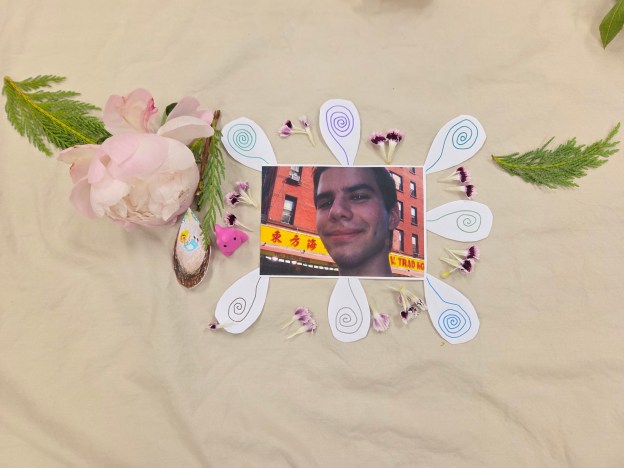
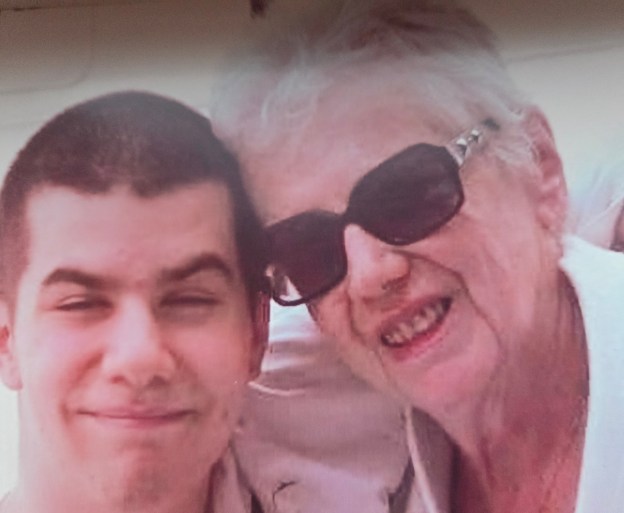
I miss you, Joseph. I wish you would have stayed. Maybe you would have a family now. I would love to see you with your own kids. I think you would have made a wonderful dad. I love you, Son. I will see you again.

EMPTYING

19. FIND WAYS TO UNDERSTAND AND COME TO THE LIMITS OF YOUR GUILT

  • Talk about any lingering feelings of guilt, regret and remorse. Don’t nurse them and continue to punish yourself for them. Instead, give them voice and see how their power over you diminishes.
  • I would be remiss if I did not point out that some parents are in fact partly or wholly responsible for their child’s death, whether it was intentional or accidental. These parents often benefit from professional help in dealing with their overwhelming guilt. (HEALING A PARENT’S GRIEVING HEART: 100 PRACTICAL IDEAS AFTER YOUR CHILD DIES; Alan D. Wolfelt, PhD; 2005)

UGH! What a mixed bag of feelings this brings up. These are only two of the bullet points that appear on the page I read today.

I chuckled when I saw the title. I’d just listened to, and meditated on, the recording for today in the Hallow app’s PRAY40 challenge, a Lenten practice. We were asked to reflect on “What ‘junk’ do you need to remove from your heart this Lent?” My immediate reaction was GUILT! Then I decided to meditate for 20 minutes and see what arose. I saw a black darkness, then the Gollum I mentioned in yesterday’s post. I decided that I need to remove from my heart that image of myself as not good enough, bad, evil – to see myself as God sees me.

So, I was tickled to see “FIND WAYS TO UNDERSTAND AND COME TO THE LIMITS OF YOUR GUILT” at the top of the page. I was reassured by most of the author’s bullet points, especially the first one, noted above, where it says not to nurse feelings of guilt. I thought, great, I can do this, I can unpack the heaviness I carry around with me, cut myself a break.

Then I read the second one noted above…some parents ARE partly or wholly responsible for their child’s death. THAT was like a smack in the face…“You’re not getting out of this THAT easily!!!” 

I didn’t kill Joseph. He killed himself. BUT, he did it after I told him that he could no longer live in my house. I should note here, that he had made several other attempts that were not reactions to anything I said or did. And I know that not everyone will kill themselves because their mom kicks them out of the house.

I participated in an on-line suicide loss group run by David Kessler, another renowned grief loss professional. I got on live with him, one-to-one, and told him my son’s death was my fault and why. He assured me that there were likely other parents who lost a child and blamed themselves for NOT using tough love. So…none of us can help but blame ourselves.

So…IS it partly my fault? I don’t know. I do know that I worked hard at being a parent. I STUDIED to be a parent. I read books, I took courses, I talked to professionals, educators, and friends. I reached out for help wherever I could find it. 

I told him, when he moved back in with me, no alcohol, no drugs. And while I was away, he went out and got his drug of choice and used it. I found the packaging; and, I told him he’d broken our agreement. I told him my heart was broken. 

A part of me believes that he stayed as long as he did for my sake. (Although he had made previous attempts, he either reached out to someone or someone found him in time to save his life.) I think, when I said my heart was broken, it gave him permission to leave.

Another one of my children, not too long ago, after being hospitalized for a psychotic episode, said to me, “The LAST time you told someone they were homeless, they killed themselves. Is that what you want?” I had created a contract for her to return to my home. She didn’t sign it, but I told her that by returning to my home, she had, in fact, agreed to it. I tried to explain to her that I wanted her to be aware of what she needed to do in order to continue living with me, or she would be homeless, and the hospital would have to find her a place to stay. I didn’t get past the word “homeless” before she spat out that comment. She and I had been down this road before and she had lived in a group home for a while. She is back to living on her own and is working again.

So, my guilt over my son’s death is compounded by dealing with ongoing mental illness in my other children…or not dealing with it, because they won’t talk to me. In any case, the worry, and the guilt, remain.

BEING HERE NOW

16. BE AWARE THAT YOUR GRIEF AFFECTS YOUR BODY, HEART, SOCIAL SELF AND SPIRIT.

  • Grief is physically demanding. The body responds to the stress of the encounter and the immune system can weaken. You may be more susceptible to illness and physical discomforts. Grieving parents often describe their grief as a pain in the chest or a physical ache. You will probably also feel sluggish or highly fatigued. Some people call this the “lethargy of grief”.
  • The emotional toll of grief is complex and painful. Mourners often feel many different feelings, and those feelings can shift and blur over time. 
  • Bereavement naturally results in social discomfort. Friends and family often withdraw from mourners, leaving us isolated and unsupported. Mourners often feel out of place in a setting they once felt a part of.
  • Mourners often ask, “Why go on living?” “Will my life have meaning now?” “Where is God in this?” Spiritual questions such as these are natural and necessary but also draining. 
  • All four facets of yourself are under attack. You may feel weak and powerless, especially in the early weeks and months. Only over time will you gain the strength to fight back.

CARPE DIEM: 

If you’ve felt physically affected by your grief, see a doctor this week. Sometimes it’s comforting to receive a clean bill of health. (HEALING A PARENT’S GRIEVING HEART: 100 PRACTICAL IDEAS AFTER YOUR CHILD DIES, Alan D. Wolfelt, PhD, 2005)

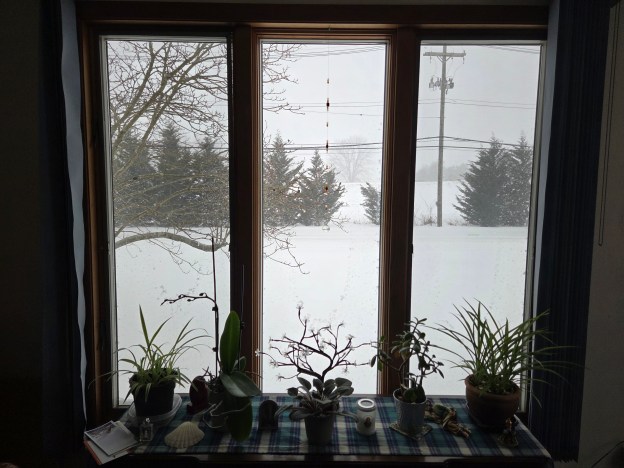
Usually, I just pick a snippet from the page, but today, all of it grabs my attention. It all rings true for me. It’s a snowy day here in the northeastern US. I’m enjoying being in my nice warm home, with a blanket on my lap, and a cup of tea. My kids would laugh about “my nice warm home”. I keep it at 65 when I’m up and 60 when I’m out or in bed.

Grief certainly is physically demanding. It’s a full-body experience. As my rent heart mends back together, I can finally feel the grief and externalize it into mourning. I could always talk about Joseph’s death, but a part of me still didn’t believe it. I remember at the burial site, standing at the foot of his casket. I didn’t sit with the rest of the mourners. I stood opposite the Deacon, who prayed the final prayers at the head of the casket. We looked into each other’s eyes. “May perpetual light shine upon him…And may his soul and the souls of all the faithful departed, through the mercy of God, rest in peace. Amen.” It was all so unreal.

My friend from Maine had driven me to the funeral home where I met my ex-husband, his wife, and our daughters, to make the “final arrangements”. Just as we were leaving to go there, a Deacon from my church and his wife came to the house. I told Deacon Steve and his wife, Lois, that I had called the rectory the night it happened. His response was, “Where was your community?” If only I had called them directly…The priest I spoke with only told me that the funeral home would call them to make arrangements. 

The funeral director was a lovely man, who had also lost a child. Her portrait hangs in the entryway. I was okay while we sat at the desk in his office…or as okay as I could be. I don’t know that I said anything. When we were led into the showroom to choose a casket, I couldn’t enter the room. I backed out and went outside to be with my friend. I don’t remember if I went back in. It was that sense of unreality. That rending between what was and what I accepted. Again, I say that it is only recently that I believe he is really dead…through the process of working through this book and having been to Dr. Wolfelt’s presentation.

I am always in pain, in most of my body. I have been diagnosed with fibromyalgia, which was basically a rule-out of other diseases. I know, and I teach, that we carry our traumas in our bodies. This is the heaviest of the traumas I have experienced. The burden is made greater by my guilt and all the “what ifs” and “if onlys”. I have participated in various grief groups, in-person and virtually. They have all been helpful in one way or another. The suicide survivor groups have probably been the most helpful and I have made friends through them. No one else understands the depth of this particular loss. We see each other socially as well.

Social situations are very difficult for me. I prefer one-on-one get-togethers. Anxiety and a sense of just not fitting in anymore interferes with going to parties, celebrations, and group events, except for with the survivors, who feel the same way and give comfort to each other as a result of this understanding.

Day to day living can seem pointless at times. Heavy. But I have learned to Be Here Now, again, as Baba Dam Rass would say. There is a sacredness in each moment, each breath.

TODAY IS NOT THE DAY

15. CRY

  • Tears are a natural cleansing and healing mechanism. It’s OK to cry. In fact, it’s good to cry when you feel like it. What’s more, tears are a form of mourning. They are sacred! 

CARPE DIEM:  If you feel like it, have a good cry today. Find a safe place to embrace your pain and cry as long and as hard as you want to.  (HEALING A PARENT’S GRIEVING HEART: 100 PRACTICAL IDEAS AFTER YOUR CHILD DIES, Alan D. Wolfelt, PhD, 2005)

I don’t feel like it today. I’m okay. I’m a little tired. Just enjoying being in the house on this cold, damp, dreary day. Doing laundry and a little cleaning. Mostly reading. Some meditating. I’m aware that my heart is healing. It’s only taken eleven plus years. 

The night I found my son, I don’t know if I cried. I remember screaming. My heart, my soul, my very self, split in two. It is only now that I feel some mending happening. I’m coming back to myself, acknowledging that my son is indeed dead and gone. My son. The child I raised. The boy who felt things so strongly. I described him as wearing his nerves, as a child, on the outside of his body. My beautiful boy.

Wednesday was the first anniversary of the death of my mother. Not by suicide, like my son. I do believe she gave up though. She was 87 and a half. She’d survived all the members of her family, except for some in-laws, as well as the loss of her best friend. The last loss, the final straw, was her younger sister. Until the last few days, she continued to be active in her assisted living community. Then she was having difficulty breathing, her pulse-ox was very low, but she wouldn’t keep the oxygen on. 

When my sister called to say she was gone, I was shocked. We’d just gotten her on to hospice services because she was refusing to go to the hospital and she needed more care than the facility could provide for her. I told her it didn’t mean she was going to die, that some people graduate from hospice. (I’d worked as a hospice social worker.) Apparently, she decided otherwise.

I had a Mass celebrated for her yesterday at my parish church. Before Mass, I thought about telling the priest the correct pronunciation of her name, but he was running late and I decided not to interrupt him as he got ready. He mispronounced it. Many people do. Obviously not an English major. A vowel followed by double consonants carries the short sound, no? He said it with the long sound. 

I reposted her eulogy, photos, and stories. I felt guilty when I saw my sister posted, “we miss you”. I don’t miss her. Not really. She wasn’t the easiest person to be around. All my life her anxiety took first priority. I remember, even as a child, trying to manage her anxiety. Once, she left the window by the stove open after she hung out some laundry (NY apartment living). The curtain blew into the flame and caught fire. The flame blew across the window shade and it dropped. I called her, in a monotone, “Mo-om, the curtains are on fire.”  I was maybe 10 years old.

I visited her grave yesterday. Afterward, I went to my sister’s. We went out to lunch and then spent time together at her apartment. I got to see my niece too. It was a lovely visit. We are really just getting to know each other. Enjoy each other. 

We agreed that, growing up, we were just a bunch of people living in the same house. Mom was a switchboard operator when I was young, later a receptionist. She operated that way in life as well. She talked about each of us, her four kids, to each of us. In a way, it kept us separate. I remember, having started communicating directly with my sister. Mom told me something about her; and, when I said I already knew, she was surprised…like how dare I already know that. So…looking back, I think it was intentional. Sad to say.

I always knew anxiety was an issue for her. She started taking Valium, Mother’s Little Helper, in the “60s and continued through old age. Later she had Xanax. She didn’t drink a lot, but she’d hobble to the liquor store down the block from her Senior apartment. She spent some time in 12 Step meetings, Al-Anon Adult Children, and talked about getting the best therapy for $1 (donation).

Everybody loved her. Well, there were a few that told my poor sister she was a saint for dealing with her. She had the major care-taking duties. 

On the anniversary, my daughter, granddaughter and I went out to an Irish pub for dinner. Mom loved all things Irish. We would sometimes take her out to an Irish pub, where she would order a quesadilla. I’m not kidding. 

Now she’s with my son. I hope they’re enjoying each other’s company.