Category Archives: Suicide Loss

BEING HERE NOW

16. BE AWARE THAT YOUR GRIEF AFFECTS YOUR BODY, HEART, SOCIAL SELF AND SPIRIT.

  • Grief is physically demanding. The body responds to the stress of the encounter and the immune system can weaken. You may be more susceptible to illness and physical discomforts. Grieving parents often describe their grief as a pain in the chest or a physical ache. You will probably also feel sluggish or highly fatigued. Some people call this the “lethargy of grief”.
  • The emotional toll of grief is complex and painful. Mourners often feel many different feelings, and those feelings can shift and blur over time. 
  • Bereavement naturally results in social discomfort. Friends and family often withdraw from mourners, leaving us isolated and unsupported. Mourners often feel out of place in a setting they once felt a part of.
  • Mourners often ask, “Why go on living?” “Will my life have meaning now?” “Where is God in this?” Spiritual questions such as these are natural and necessary but also draining. 
  • All four facets of yourself are under attack. You may feel weak and powerless, especially in the early weeks and months. Only over time will you gain the strength to fight back.

CARPE DIEM: 

If you’ve felt physically affected by your grief, see a doctor this week. Sometimes it’s comforting to receive a clean bill of health. (HEALING A PARENT’S GRIEVING HEART: 100 PRACTICAL IDEAS AFTER YOUR CHILD DIES, Alan D. Wolfelt, PhD, 2005)

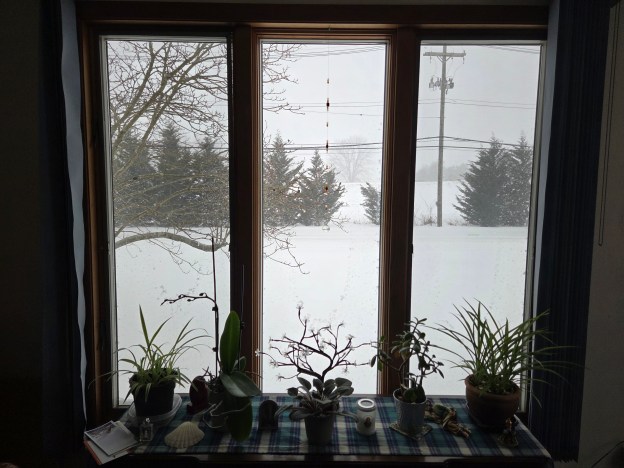
Usually, I just pick a snippet from the page, but today, all of it grabs my attention. It all rings true for me. It’s a snowy day here in the northeastern US. I’m enjoying being in my nice warm home, with a blanket on my lap, and a cup of tea. My kids would laugh about “my nice warm home”. I keep it at 65 when I’m up and 60 when I’m out or in bed.

Grief certainly is physically demanding. It’s a full-body experience. As my rent heart mends back together, I can finally feel the grief and externalize it into mourning. I could always talk about Joseph’s death, but a part of me still didn’t believe it. I remember at the burial site, standing at the foot of his casket. I didn’t sit with the rest of the mourners. I stood opposite the Deacon, who prayed the final prayers at the head of the casket. We looked into each other’s eyes. “May perpetual light shine upon him…And may his soul and the souls of all the faithful departed, through the mercy of God, rest in peace. Amen.” It was all so unreal.

My friend from Maine had driven me to the funeral home where I met my ex-husband, his wife, and our daughters, to make the “final arrangements”. Just as we were leaving to go there, a Deacon from my church and his wife came to the house. I told Deacon Steve and his wife, Lois, that I had called the rectory the night it happened. His response was, “Where was your community?” If only I had called them directly…The priest I spoke with only told me that the funeral home would call them to make arrangements. 

The funeral director was a lovely man, who had also lost a child. Her portrait hangs in the entryway. I was okay while we sat at the desk in his office…or as okay as I could be. I don’t know that I said anything. When we were led into the showroom to choose a casket, I couldn’t enter the room. I backed out and went outside to be with my friend. I don’t remember if I went back in. It was that sense of unreality. That rending between what was and what I accepted. Again, I say that it is only recently that I believe he is really dead…through the process of working through this book and having been to Dr. Wolfelt’s presentation.

I am always in pain, in most of my body. I have been diagnosed with fibromyalgia, which was basically a rule-out of other diseases. I know, and I teach, that we carry our traumas in our bodies. This is the heaviest of the traumas I have experienced. The burden is made greater by my guilt and all the “what ifs” and “if onlys”. I have participated in various grief groups, in-person and virtually. They have all been helpful in one way or another. The suicide survivor groups have probably been the most helpful and I have made friends through them. No one else understands the depth of this particular loss. We see each other socially as well.

Social situations are very difficult for me. I prefer one-on-one get-togethers. Anxiety and a sense of just not fitting in anymore interferes with going to parties, celebrations, and group events, except for with the survivors, who feel the same way and give comfort to each other as a result of this understanding.

Day to day living can seem pointless at times. Heavy. But I have learned to Be Here Now, again, as Baba Dam Rass would say. There is a sacredness in each moment, each breath.
I GIVE MYSELF GRACE

14. KNOW THAT GRIEF DOES NOT PROCEED IN ORDERLY, PREDICTABLE “STAGES”.

Be compassionate with yourself as you experience your own unique grief journey (HEALING A PARENT’S GRIEVING HEART: 100 PRACTICAL IDEAS AFTER YOUR CHILD DIES, Alan D Wolfelt, PhD, 2005)

I have finally, after 11+ years, arrived at a place where I can give myself some grace. I no longer feel the need to punish myself for my son’s death. I write this with some trepidation, although I note that I did not write “I no longer blame myself or feel guilt”.

I have finally arrived at the place where I can truly mourn his death. The horror of finding him is less obtrusive. It no longer blunts the grief as much. 

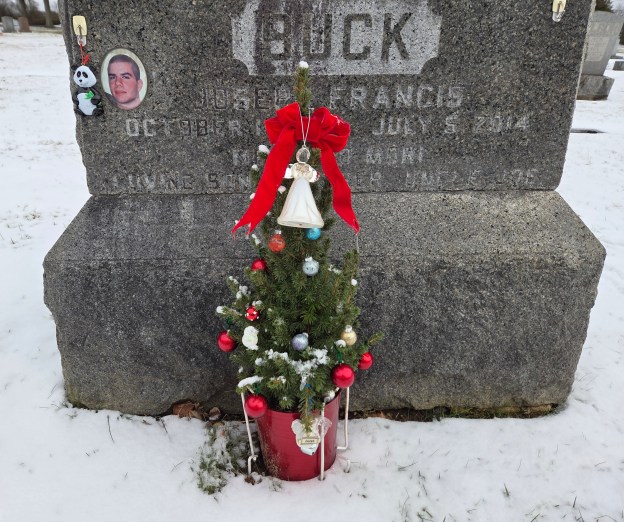
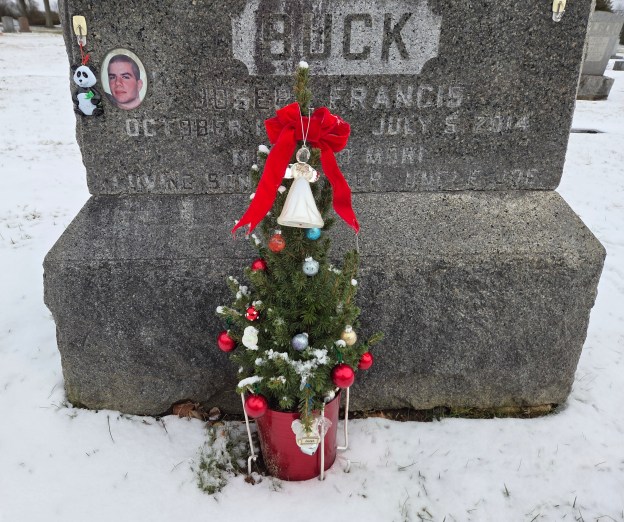
I visited his grave the other day. I straightened the angel on the decorated Christmas tree someone left there…likely his dad or sister. They also left a panda ornament hanging on the headstone, one of his favorite animals. It was bitter sweet. I believe I said, “Hey Brat,” as I looked at his photo embedded in the stone. I didn’t stay long, but it was different from other visits. I was present. I remained in my body.

I think having both of my daughters and my grandchildren with me on Christmas Eve helped to bring along this softening. I feel more at peace. I am ending this year on a more self-compassionate note.

THERE IS NO MEANING

12. UNDERSTAND THE SIX NEEDS OF MOURNING

Need #5: Search for meaning

  • “Why?” questions may surface uncontrollably and often precede “How?” questions. “Why did this happen?” comes before “How will I go on living?”

CARPE DIEM:

Write down a list of “why” questions that have surfaced for you since the death. Find a friend or counselor who will explore these questions with you without thinking she has to give you answers. ( HEALING A PARENT’S GRIEVING HEART: 100 PRACTICAL IDEAS AFTER YOUR CHILD DIES, Alan D Wolfelt, PH.D., 2005)

I didn’t ask why then; and, I don’t ask why now. I believed I knew. I believed and continue to believe it was my fault. Oh, there’s a part of me that gives him the dignity of making his own choice, but if I hadn’t told him that day that he had to move out…If I hadn’t told him, “My heart is broken”…he would still be here.

I didn’t and don’t blame God. As a matter of fact, in a spiritual direction session, I asked Jesus where he was when Joseph died. He told me he was here with him. I saw Joseph walk right into his arms and say to Jesus, “You ARE real!” 

For that I am grateful. 

The “Why?”s I do have include: 

“Why did God give me not one but THREE mentally ill children?” 

“What was he thinking?” 

I thought I did a good job raising them. No, I didn’t. I struggled and judged myself. But I worked so hard at it. I STUDIED to be a mother. I didn’t feel I had any “mother’s intuition”. I had NO IDEA how to be a parent. I read and reread the Gesell books with each of my four children, Birth to One Year, Your One Year Old, Your Two Year Old, etc…Between Parent and Teenager. I read Parent Effectiveness Training. I took trainings. I reached out for all the help I could get. 

I thought I was doing them a favor by letting them be who they were. Now I wonder. Nah. I still believe letting our children be who they are is best…a gift.

I remember, when they were young, thinking “I don’t know what I would do if I had special needs children.” Well, most of them were, are, special needs. It just all seemed normal to me having grown up in my family. 

Joseph had made multiple suicide attempts before he died. I believe my comment, “My heart is broken,” after discovering he had been using again, released him. Maybe he held on so long because he knew I couldn’t handle it if he died. Maybe that comment made him think I’d be better off without him. Who knows?

I AM STILL JOSEPH’S MOTHER

11. UNDERSTAND THE SIX NEEDS OF MOURNING

Need #4: Develop a new self-identity

  • You have gone from being a parent to a “bereaved parent”. You thought of yourself, at least in part, as your child’s mother or father. Even if you have other children, this perception of yourself has changed. If the child who died was your only child, you may wonder whether you are still a parent at all.

CARPE DIEM:

Write out a response to this prompt:  I used to be . Now that

died, I am . This makes me feel . Keep writing as long as you want.

I didn’t “used to be” anything. I am still Joseph’s mother. For a time after his death, eleven years ago, I may have filled in this blank differently. No. No, I wouldn’t. Likely, I wouldn’t have filled it in at all. I couldn’t. It was too raw.

I remember, shortly after his death, sitting in my therapist’s office and asking him, “What do I say when someone asks me how many children I have?” I am past that now. I answer, “Four”. I gave birth to four children, regardless of how many still inhabit this earth. When I am asked their ages, I respond differently depending on who is asking, and why. Sometimes the conversation is easy. Someone is genuinely interested; and, I will respond fully, saying Joseph died. If they ask how, I tell them.

I find that, sometimes, when I share that he died by suicide, people have experienced their own suicide losses. Sadly, it is not all that uncommon.