EMPTYING

19. FIND WAYS TO UNDERSTAND AND COME TO THE LIMITS OF YOUR GUILT

  • Talk about any lingering feelings of guilt, regret and remorse. Don’t nurse them and continue to punish yourself for them. Instead, give them voice and see how their power over you diminishes.
  • I would be remiss if I did not point out that some parents are in fact partly or wholly responsible for their child’s death, whether it was intentional or accidental. These parents often benefit from professional help in dealing with their overwhelming guilt. (HEALING A PARENT’S GRIEVING HEART: 100 PRACTICAL IDEAS AFTER YOUR CHILD DIES; Alan D. Wolfelt, PhD; 2005)

UGH! What a mixed bag of feelings this brings up. These are only two of the bullet points that appear on the page I read today.

I chuckled when I saw the title. I’d just listened to, and meditated on, the recording for today in the Hallow app’s PRAY40 challenge, a Lenten practice. We were asked to reflect on “What ‘junk’ do you need to remove from your heart this Lent?” My immediate reaction was GUILT! Then I decided to meditate for 20 minutes and see what arose. I saw a black darkness, then the Gollum I mentioned in yesterday’s post. I decided that I need to remove from my heart that image of myself as not good enough, bad, evil – to see myself as God sees me.

So, I was tickled to see “FIND WAYS TO UNDERSTAND AND COME TO THE LIMITS OF YOUR GUILT” at the top of the page. I was reassured by most of the author’s bullet points, especially the first one, noted above, where it says not to nurse feelings of guilt. I thought, great, I can do this, I can unpack the heaviness I carry around with me, cut myself a break.

Then I read the second one noted above…some parents ARE partly or wholly responsible for their child’s death. THAT was like a smack in the face…“You’re not getting out of this THAT easily!!!” 

I didn’t kill Joseph. He killed himself. BUT, he did it after I told him that he could no longer live in my house. I should note here, that he had made several other attempts that were not reactions to anything I said or did. And I know that not everyone will kill themselves because their mom kicks them out of the house.

I participated in an on-line suicide loss group run by David Kessler, another renowned grief loss professional. I got on live with him, one-to-one, and told him my son’s death was my fault and why. He assured me that there were likely other parents who lost a child and blamed themselves for NOT using tough love. So…none of us can help but blame ourselves.

So…IS it partly my fault? I don’t know. I do know that I worked hard at being a parent. I STUDIED to be a parent. I read books, I took courses, I talked to professionals, educators, and friends. I reached out for help wherever I could find it. 

I told him, when he moved back in with me, no alcohol, no drugs. And while I was away, he went out and got his drug of choice and used it. I found the packaging; and, I told him he’d broken our agreement. I told him my heart was broken. 

A part of me believes that he stayed as long as he did for my sake. (Although he had made previous attempts, he either reached out to someone or someone found him in time to save his life.) I think, when I said my heart was broken, it gave him permission to leave.

Another one of my children, not too long ago, after being hospitalized for a psychotic episode, said to me, “The LAST time you told someone they were homeless, they killed themselves. Is that what you want?” I had created a contract for her to return to my home. She didn’t sign it, but I told her that by returning to my home, she had, in fact, agreed to it. I tried to explain to her that I wanted her to be aware of what she needed to do in order to continue living with me, or she would be homeless, and the hospital would have to find her a place to stay. I didn’t get past the word “homeless” before she spat out that comment. She and I had been down this road before and she had lived in a group home for a while. She is back to living on her own and is working again.

So, my guilt over my son’s death is compounded by dealing with ongoing mental illness in my other children…or not dealing with it, because they won’t talk to me. In any case, the worry, and the guilt, remain.

“BE ANGRY BUT DO NOT SIN” (Ephesians 4:26)

18. KNOW THAT IT’S OKAY TO FEEL ANGRY

Grieving parents often feel angry – at others whom they perceive caused or contributed to the death, at themselves for letting it happen, at God, even at the child herself for having abandoned them. (HEALING A PARENT’S GRIEVING HEART: 100 PRACTICAL IDEAS AFTER YOUR CHILD DIES; Alan D. Wolfelt, PhD; 2005)

Anger wasn’t one of my feelings. It is not an emotion I am comfortable with. Well, for myself that is. I have no trouble feeling anger at injustice toward other people, but that’s a whole other topic.

It may have crept up here and there. Before Joseph’s death, I had taken him to an appointment with a psychiatrist at a local clinic. He came out saying the doctor told him his diagnosis was “laziness”. THAT pissed me off. Medical professionals, especially in the field of psychiatry, ought to have a better understanding of the people with whom they interact and for whom they prescribe. A little compassion would be appreciated.

I can’t say I was angry about it, but I wondered why my other kids, and their father, didn’t check in on him that day. I had let them all know that I had found packaging from his drug of choice and that I had given him the weekend to find somewhere else to live. It is all too easy and comfortable to take on blame and guilt myself. I wish they had checked in on him. I don’t know that it would have made a difference.

I wish that he would have made a choice to stay. I have smacked his photo on the grave stone and called him a brat, but I don’t feel angry about it, not for long anyway.

I have a difficult relationship with anger. Somewhere, sometime, somehow, I internalized the idea that it is wrong to feel angry. I have seen the pain inflicted by people who just let their anger fly. Anger scares me. (Unless it’s righteous anger, which I experience for others, of course.) If I experience anger for myself, which is rare: and, I try to speak up and out in defense of myself, which is rarer still, I inevitably end up in tears, which is not at all helpful.

I have this awareness, though, that deep within me exists a rage in chains. I don’t know what it is or where it comes from, but it’s there. I wish I could let it out. It’s that Gollum deep inside, that ugly creature I think is me, that if anyone really got to know me they would see.

At some point, in therapy, I became aware that this Gollum is actually a frightened child who feels not good enough. I try to spend time with her, on occasion, and let her know she is loved. 

It’s not easy being me.

Sometime after Joseph’s death, I participated in a meeting at my county’s mental health and addiction services office, a focus group of sorts. They were asking for community input on gaps in services. I told them that there needed to be more long-term residential support for people experiencing co-occurring, mental health and substance use disorders. Joseph had been in rehabs, hospitals, halfways houses…but it was for treatment of one or the other. He needed support for both. I don’t know if that has gotten any better, but I think not.

I worked as a psychiatric screener for a while. I had a guy come in who needed treatment for both. I held him in the unit, with his consent, trying to find an appropriate placement. One day, while I was sent out on another call, management kicked him out, escorted by police. I was angry then! It was run more like a jail than a medical facility. Not long afterward, I found another job. That’s a whole other disappointing story – Partial Hospitalization, Intensive Outpatient program (PHP/IOP).

So, now I’m retired. I guess. I have a hard time admitting it. I take assignments now and then through a company with which I am considered “On Demand”. I’ve also agreed to work in an outpatient private practice one day a week, but no clients yet. Maybe it’s not meant to be. Meanwhile, for the most part, I’m enjoying not working.

(Featured image accessed at https://news.stthomas.edu/publication-article/the-unbearable-sadness-of-being-gollum/)

MULTITUDE OF FEELINGS?

17. EXPECT TO HAVE A MULTITUDE OF FEELINGS

  • Grieving parents don’t just feel sad. They often feel numb, angry, guilty, afraid, regretful, confused, even relieved (in cases of chronic or terminal illness, for example). Sometimes these feelings follow each other within a short period of time or they may occur simultaneously. I often say that grief is not experienced as a single note but as a chord.

CARPE DIEM:

Which grief feeling has surprised you most? Make a point

of talking about this feeling with someone today.

(HEALING A PARENTS’S GRIEVING HEART:

100 PRACTICAL IDEAS AFTER YOUR CHILD DIES;

Alan D. Wolfelt, PhD; 2005)

I suppose the feeling I first felt, upon discovering my deceased son, was horror. I don’t know that I could identify feelings after that, at least not immediately. I was split open. I screamed and screamed. No one heard me.

His body was already cold and stiff, and yet, once I reached the 911 operator – it took several attempts – I obeyed her directions. I cut him down and I performed CPR, listening to the air whistling through his clenched teeth, although I knew it was pointless.

Once the officers arrived, I obeyed their direction. I went into the next room, the dining room, and sat in a chair. I suppose I was hyperventilating. An officer stood over me and kept saying, “Calm down. Calm down.” I looked him in the eye, saying nothing, but thinking, “You’ve got to be fucking kidding me.” And yes, like the memes say…never in the history of someone saying “Calm down” has anyone calmed down.

At some point, I went upstairs, and picked the lock to my bedroom to get in. I had locked it so that my son couldn’t open it and get his medication to overdose. He had made a number of attempts before. Of course, I had locked him out of the house as well, but he managed to get back in and found another method.

I sat on my meditation pillow, on the floor, and began praying the Chaplet of the Divine Mercy, a Catholic prayer practice encouraged for the dead and dying. Another officer came upstairs and asked if there was anyone he could  call for me, to get me out of the house. I said no. I wasn’t leaving the house until my son’s body was removed.

At some point, I made some calls. I called each of my other children, as well as my ex-husband. My eldest asked how he did it and hung up when I told her. My number two child was more supportive. He even called back to check on me. Number three didn’t answer, so I left a message to call me back. My ex didn’t answer. I also left a message for a call back. I called a neighbor for support, no answer there either. Left a message. This was late at night. I’d worked the second shift at a psychiatric children’s home. 

I called my parish church and reached the associate, who assured me that the funeral home would be in touch with them to make arrangements. No offer of support or a visit.

I finally ended up calling my ex-partner, who was at work as a police dispatcher over an hour away. He left work and came to be with me, arriving before all the to-do was over. He took me to his apartment and remained with me throughout the ordeal and years after.

I cried non-stop for a long time, throughout the wake and funeral. 

What was I feeling? I was nothing BUT feeling. Horror, sadness, grief, guilt. And, at some point, relief. The fear of losing him was gone, because he was gone. He had a chronic and, ultimately, terminal illness, bipolar depression.

The guilt was the overarching feeling for many years. This year it will be twelve years. It is finally ebbing, somewhat, so that I am able to mourn. I came across a post on one of the survivors of suicide pages I follow on FaceBook. It said, “I would have saved you if I could.” And that gave me a tremendous sense of peace. Yes, Joseph, I would have saved you if I could. I did not want you to die.

BEING HERE NOW

16. BE AWARE THAT YOUR GRIEF AFFECTS YOUR BODY, HEART, SOCIAL SELF AND SPIRIT.

  • Grief is physically demanding. The body responds to the stress of the encounter and the immune system can weaken. You may be more susceptible to illness and physical discomforts. Grieving parents often describe their grief as a pain in the chest or a physical ache. You will probably also feel sluggish or highly fatigued. Some people call this the “lethargy of grief”.
  • The emotional toll of grief is complex and painful. Mourners often feel many different feelings, and those feelings can shift and blur over time. 
  • Bereavement naturally results in social discomfort. Friends and family often withdraw from mourners, leaving us isolated and unsupported. Mourners often feel out of place in a setting they once felt a part of.
  • Mourners often ask, “Why go on living?” “Will my life have meaning now?” “Where is God in this?” Spiritual questions such as these are natural and necessary but also draining. 
  • All four facets of yourself are under attack. You may feel weak and powerless, especially in the early weeks and months. Only over time will you gain the strength to fight back.

CARPE DIEM: 

If you’ve felt physically affected by your grief, see a doctor this week. Sometimes it’s comforting to receive a clean bill of health. (HEALING A PARENT’S GRIEVING HEART: 100 PRACTICAL IDEAS AFTER YOUR CHILD DIES, Alan D. Wolfelt, PhD, 2005)

Usually, I just pick a snippet from the page, but today, all of it grabs my attention. It all rings true for me. It’s a snowy day here in the northeastern US. I’m enjoying being in my nice warm home, with a blanket on my lap, and a cup of tea. My kids would laugh about “my nice warm home”. I keep it at 65 when I’m up and 60 when I’m out or in bed.

Grief certainly is physically demanding. It’s a full-body experience. As my rent heart mends back together, I can finally feel the grief and externalize it into mourning. I could always talk about Joseph’s death, but a part of me still didn’t believe it. I remember at the burial site, standing at the foot of his casket. I didn’t sit with the rest of the mourners. I stood opposite the Deacon, who prayed the final prayers at the head of the casket. We looked into each other’s eyes. “May perpetual light shine upon him…And may his soul and the souls of all the faithful departed, through the mercy of God, rest in peace. Amen.” It was all so unreal.

My friend from Maine had driven me to the funeral home where I met my ex-husband, his wife, and our daughters, to make the “final arrangements”. Just as we were leaving to go there, a Deacon from my church and his wife came to the house. I told Deacon Steve and his wife, Lois, that I had called the rectory the night it happened. His response was, “Where was your community?” If only I had called them directly…The priest I spoke with only told me that the funeral home would call them to make arrangements. 

The funeral director was a lovely man, who had also lost a child. Her portrait hangs in the entryway. I was okay while we sat at the desk in his office…or as okay as I could be. I don’t know that I said anything. When we were led into the showroom to choose a casket, I couldn’t enter the room. I backed out and went outside to be with my friend. I don’t remember if I went back in. It was that sense of unreality. That rending between what was and what I accepted. Again, I say that it is only recently that I believe he is really dead…through the process of working through this book and having been to Dr. Wolfelt’s presentation.

I am always in pain, in most of my body. I have been diagnosed with fibromyalgia, which was basically a rule-out of other diseases. I know, and I teach, that we carry our traumas in our bodies. This is the heaviest of the traumas I have experienced. The burden is made greater by my guilt and all the “what ifs” and “if onlys”. I have participated in various grief groups, in-person and virtually. They have all been helpful in one way or another. The suicide survivor groups have probably been the most helpful and I have made friends through them. No one else understands the depth of this particular loss. We see each other socially as well.

Social situations are very difficult for me. I prefer one-on-one get-togethers. Anxiety and a sense of just not fitting in anymore interferes with going to parties, celebrations, and group events, except for with the survivors, who feel the same way and give comfort to each other as a result of this understanding.

Day to day living can seem pointless at times. Heavy. But I have learned to Be Here Now, again, as Baba Dam Rass would say. There is a sacredness in each moment, each breath.

TODAY IS NOT THE DAY

15. CRY

  • Tears are a natural cleansing and healing mechanism. It’s OK to cry. In fact, it’s good to cry when you feel like it. What’s more, tears are a form of mourning. They are sacred! 

CARPE DIEM:  If you feel like it, have a good cry today. Find a safe place to embrace your pain and cry as long and as hard as you want to.  (HEALING A PARENT’S GRIEVING HEART: 100 PRACTICAL IDEAS AFTER YOUR CHILD DIES, Alan D. Wolfelt, PhD, 2005)

I don’t feel like it today. I’m okay. I’m a little tired. Just enjoying being in the house on this cold, damp, dreary day. Doing laundry and a little cleaning. Mostly reading. Some meditating. I’m aware that my heart is healing. It’s only taken eleven plus years. 

The night I found my son, I don’t know if I cried. I remember screaming. My heart, my soul, my very self, split in two. It is only now that I feel some mending happening. I’m coming back to myself, acknowledging that my son is indeed dead and gone. My son. The child I raised. The boy who felt things so strongly. I described him as wearing his nerves, as a child, on the outside of his body. My beautiful boy.

Wednesday was the first anniversary of the death of my mother. Not by suicide, like my son. I do believe she gave up though. She was 87 and a half. She’d survived all the members of her family, except for some in-laws, as well as the loss of her best friend. The last loss, the final straw, was her younger sister. Until the last few days, she continued to be active in her assisted living community. Then she was having difficulty breathing, her pulse-ox was very low, but she wouldn’t keep the oxygen on. 

When my sister called to say she was gone, I was shocked. We’d just gotten her on to hospice services because she was refusing to go to the hospital and she needed more care than the facility could provide for her. I told her it didn’t mean she was going to die, that some people graduate from hospice. (I’d worked as a hospice social worker.) Apparently, she decided otherwise.

I had a Mass celebrated for her yesterday at my parish church. Before Mass, I thought about telling the priest the correct pronunciation of her name, but he was running late and I decided not to interrupt him as he got ready. He mispronounced it. Many people do. Obviously not an English major. A vowel followed by double consonants carries the short sound, no? He said it with the long sound. 

I reposted her eulogy, photos, and stories. I felt guilty when I saw my sister posted, “we miss you”. I don’t miss her. Not really. She wasn’t the easiest person to be around. All my life her anxiety took first priority. I remember, even as a child, trying to manage her anxiety. Once, she left the window by the stove open after she hung out some laundry (NY apartment living). The curtain blew into the flame and caught fire. The flame blew across the window shade and it dropped. I called her, in a monotone, “Mo-om, the curtains are on fire.”  I was maybe 10 years old.

I visited her grave yesterday. Afterward, I went to my sister’s. We went out to lunch and then spent time together at her apartment. I got to see my niece too. It was a lovely visit. We are really just getting to know each other. Enjoy each other. 

We agreed that, growing up, we were just a bunch of people living in the same house. Mom was a switchboard operator when I was young, later a receptionist. She operated that way in life as well. She talked about each of us, her four kids, to each of us. In a way, it kept us separate. I remember, having started communicating directly with my sister. Mom told me something about her; and, when I said I already knew, she was surprised…like how dare I already know that. So…looking back, I think it was intentional. Sad to say.

I always knew anxiety was an issue for her. She started taking Valium, Mother’s Little Helper, in the “60s and continued through old age. Later she had Xanax. She didn’t drink a lot, but she’d hobble to the liquor store down the block from her Senior apartment. She spent some time in 12 Step meetings, Al-Anon Adult Children, and talked about getting the best therapy for $1 (donation).

Everybody loved her. Well, there were a few that told my poor sister she was a saint for dealing with her. She had the major care-taking duties. 

On the anniversary, my daughter, granddaughter and I went out to an Irish pub for dinner. Mom loved all things Irish. We would sometimes take her out to an Irish pub, where she would order a quesadilla. I’m not kidding. 

Now she’s with my son. I hope they’re enjoying each other’s company. 

I GIVE MYSELF GRACE

14. KNOW THAT GRIEF DOES NOT PROCEED IN ORDERLY, PREDICTABLE “STAGES”.

Be compassionate with yourself as you experience your own unique grief journey (HEALING A PARENT’S GRIEVING HEART: 100 PRACTICAL IDEAS AFTER YOUR CHILD DIES, Alan D Wolfelt, PhD, 2005)

I have finally, after 11+ years, arrived at a place where I can give myself some grace. I no longer feel the need to punish myself for my son’s death. I write this with some trepidation, although I note that I did not write “I no longer blame myself or feel guilt”.

I have finally arrived at the place where I can truly mourn his death. The horror of finding him is less obtrusive. It no longer blunts the grief as much. 

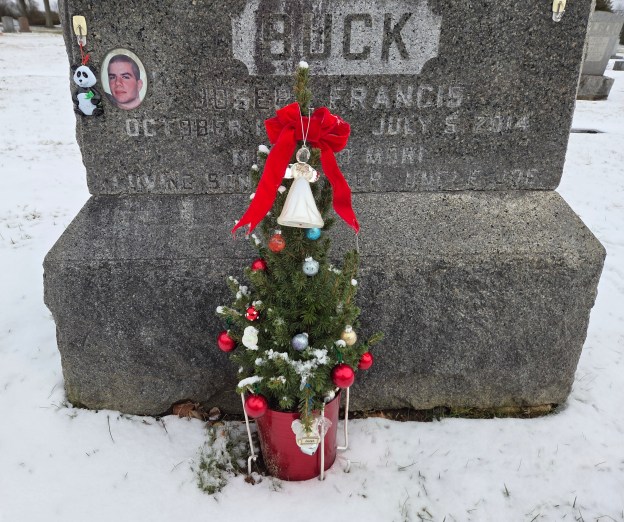
I visited his grave the other day. I straightened the angel on the decorated Christmas tree someone left there…likely his dad or sister. They also left a panda ornament hanging on the headstone, one of his favorite animals. It was bitter sweet. I believe I said, “Hey Brat,” as I looked at his photo embedded in the stone. I didn’t stay long, but it was different from other visits. I was present. I remained in my body.

I think having both of my daughters and my grandchildren with me on Christmas Eve helped to bring along this softening. I feel more at peace. I am ending this year on a more self-compassionate note.

I AM SUPPORTED BY OTHERS

UNDERSTAND THE SIX NEEDS OF MOURNING

Need #6: Receive ongoing support from others.

  • Grief is experienced in “doses” over years, not quickly and efficiently, and you will need the continued support of your friends and family for weeks, months and years.  (Alan D. Wolfelt, PH.D., HEALING A PARENT’S GRIEVING HEART: 100 PRACTICAL IDEAS AFTER YOUR CHILD DIES, 2005)

It’s been more than eleven years, and yes, I need continued support. I “accidentally” found my Survivors of Suicide group one evening, when I walked into my local county library branch and saw a hand-written sign that said “SOS”. The facilitator of the group, now my friend, likes to say it was the Holy Spirit that brought me in. I can’t disagree. At the very least, it was a “wink” from God or the Universe.

This group meets monthly in person and via Zoom, but also socially from time to time. It’s a group none of us would have chosen to join, but we find ease and comfort in each others’ presence as we share losses that are difficult for others, who have not, to understand.

Some of us recently attended the International Survivors of Suicide Loss Day program hosted by our state’s Traumatic Loss Coalition (TLC), sponsored by the American Foundation for Suicide Prevention (AFSP). Events are held annually on the Saturday before Thanksgiving. Our event included the showing of a video of interviews with survivors of suicide loss, updating their journey; a panel discussion with survivors on how their journey has been and continues; a lunch; and, breakout groups. I co-facilitated the mothers group with another mom. We’ve done this together several times now. This event is the only time we see each other, but we are closely tied together and share a warm hug when we meet.

A bunch of us from the SOS group travelled together to Survivor Day and socialized afterward at our driver’s house. His wife didn’t attend, but she cooked for us, and we all brought something to share. Others came only to the social gathering. It was good to be with them all. There is a love there that knows no bounds and I am forever grateful for the “accident” that brought me to them.

THERE IS NO MEANING

12. UNDERSTAND THE SIX NEEDS OF MOURNING

Need #5: Search for meaning

  • “Why?” questions may surface uncontrollably and often precede “How?” questions. “Why did this happen?” comes before “How will I go on living?”

CARPE DIEM:

Write down a list of “why” questions that have surfaced for you since the death. Find a friend or counselor who will explore these questions with you without thinking she has to give you answers. ( HEALING A PARENT’S GRIEVING HEART: 100 PRACTICAL IDEAS AFTER YOUR CHILD DIES, Alan D Wolfelt, PH.D., 2005)

I didn’t ask why then; and, I don’t ask why now. I believed I knew. I believed and continue to believe it was my fault. Oh, there’s a part of me that gives him the dignity of making his own choice, but if I hadn’t told him that day that he had to move out…If I hadn’t told him, “My heart is broken”…he would still be here.

I didn’t and don’t blame God. As a matter of fact, in a spiritual direction session, I asked Jesus where he was when Joseph died. He told me he was here with him. I saw Joseph walk right into his arms and say to Jesus, “You ARE real!” 

For that I am grateful. 

The “Why?”s I do have include: 

“Why did God give me not one but THREE mentally ill children?” 

“What was he thinking?” 

I thought I did a good job raising them. No, I didn’t. I struggled and judged myself. But I worked so hard at it. I STUDIED to be a mother. I didn’t feel I had any “mother’s intuition”. I had NO IDEA how to be a parent. I read and reread the Gesell books with each of my four children, Birth to One Year, Your One Year Old, Your Two Year Old, etc…Between Parent and Teenager. I read Parent Effectiveness Training. I took trainings. I reached out for all the help I could get. 

I thought I was doing them a favor by letting them be who they were. Now I wonder. Nah. I still believe letting our children be who they are is best…a gift.

I remember, when they were young, thinking “I don’t know what I would do if I had special needs children.” Well, most of them were, are, special needs. It just all seemed normal to me having grown up in my family. 

Joseph had made multiple suicide attempts before he died. I believe my comment, “My heart is broken,” after discovering he had been using again, released him. Maybe he held on so long because he knew I couldn’t handle it if he died. Maybe that comment made him think I’d be better off without him. Who knows?

I AM STILL JOSEPH’S MOTHER

11. UNDERSTAND THE SIX NEEDS OF MOURNING

Need #4: Develop a new self-identity

  • You have gone from being a parent to a “bereaved parent”. You thought of yourself, at least in part, as your child’s mother or father. Even if you have other children, this perception of yourself has changed. If the child who died was your only child, you may wonder whether you are still a parent at all.

CARPE DIEM:

Write out a response to this prompt:  I used to be . Now that

died, I am . This makes me feel . Keep writing as long as you want.

I didn’t “used to be” anything. I am still Joseph’s mother. For a time after his death, eleven years ago, I may have filled in this blank differently. No. No, I wouldn’t. Likely, I wouldn’t have filled it in at all. I couldn’t. It was too raw.

I remember, shortly after his death, sitting in my therapist’s office and asking him, “What do I say when someone asks me how many children I have?” I am past that now. I answer, “Four”. I gave birth to four children, regardless of how many still inhabit this earth. When I am asked their ages, I respond differently depending on who is asking, and why. Sometimes the conversation is easy. Someone is genuinely interested; and, I will respond fully, saying Joseph died. If they ask how, I tell them.

I find that, sometimes, when I share that he died by suicide, people have experienced their own suicide losses. Sadly, it is not all that uncommon.

TODAY, I REMEMBER THAT HE LIVED

11. UNDERSTAND THE SIX NEEDS OF MOURNING

Need #3: Remember the person who died.

  • To heal, parents need to actively remember the child who died and commemorate the life that was lived. (Alan D. Wolfelt, PhD, HEALING A PARENT’S GRIEVING HEART: 100 PRACTICAL IDEAS AFTER YOUR CHILD DIES, 2005)

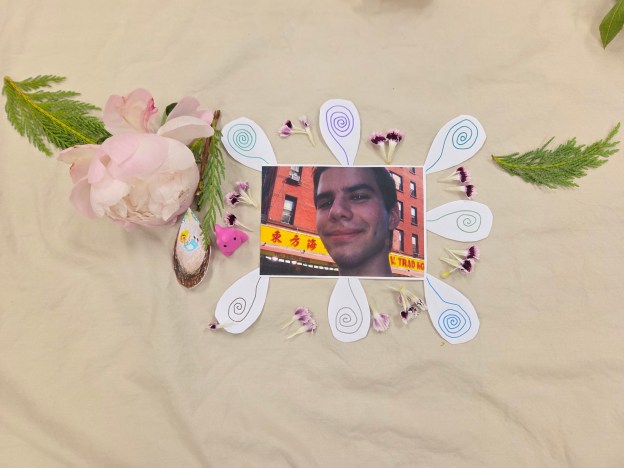
Thursday, October 16, was Joseph’s birthday. He would have turned 34 years old. 

Joseph liked to bake blondies, butterscotch brownies. I still wear a white zippered hoodie that belonged to him, when it is chilly in the house. I still have a signed cast from one time he broke a bone in his hand. He did that a few times…punching the floor, punching a wall…and hitting a beam, punching a heavy sandbag.

I still call his bedroom “Joseph’s room”, except for the few times my grandchildren (actual and “adopted”) lived in it. I still make the bed with his comforter. I just switched it up from the blue one he used as an adult to the Harry Potter one he used as a kid. He introduced me to Harry Potter. I still have books Three through Seven. We had taken the first and second ones out of the library, so I don’t own those; although, I keep looking at used book sales hoping to pick them up. I own all of the movies related to those books – some on VHS, some on DVD. I have done a marathon, watching them when I was home sick. I bought an old TV with a built-in VHS player at Goodwill for $8.99. I have other movies and shows on VHS as well.

As I write this, I am looking at school photos of all of my kids that are hanging in my living room. For the eldest, there is a photo of her shaking hands with the Dean at her college graduation. For the middle two, there are high school graduation photos; although, they have both also graduated from community college. Number three will graduate with her Bachelors next spring; and, her daughter will graduate from high school. For Joseph there is a photo from his junior year in high school. He didn’t graduate. I was tired of going to high school, for my kids. At the end of his junior year, Joseph didn’t have enough credits to move on to his senior year. I signed him out. I was done. He aced the test for his GED. He was extremely bright. That wasn’t the problem. Last year, for the tenth anniversary of his death, I reached out to the community college he had been attending. Although he hadn’t graduated, he had enough credits to do so. I was able to reach someone who followed up for me and the college issued an honorary Associates degree for him.

One summer, as a kid, he attended a computer camp at the community college. When I went to pick him up one day, the teacher came up to me and told me that he had been teaching the kids how to program their computers to play a musical scale. Joseph wrote a program to play Beethoven’s “Ode to Joy”. 

Joseph liked cinnamon-dusted apple cider donuts from Delicious Orchards, a farm market in our area. One time, when he was living with his sister, I picked some up and dropped them off for him. I don’t go there often, but when I do, I still want to pick them up for him.