Tag Archives: life

FAMILY IS COMPLICATED

22. COMMUNICATE OPENLY WITH YOUR FAMILY

  • Your partner and your surviving children are hurting, too–each in their own unique ways. Nobody can (or should try to) take away the hurt, but talking about all your thoughts and feelings since the death helps everybody feel supported and understood. 
  • Is yours an “open family system,” in which members openly talk about the death, the person who died and their grief? Or is yours a “closed family system,” in which members pretty much keep their thoughts and feelings to themselves and don’t feel safe mourning among their own family? (HEALING A PARENT’S GRIEVING HEART: 100 PRACTICAL IDEAS AFTER YOUR CHILD DIES; Alan D. Wolfelt, PhD; 2005)

Hmmm…I thought we were an “open family system.” We mentioned Joseph’s name all the time. But we talked about him, mostly, in the present tense. Like he was still alive and with us. We still talk about our experiences of feeling him near, making himself known to us. 

The day after I found him, I went to my youngest daughter’s apartment, after she called me. She already knew about Joseph’s death having gotten the news, I assume, from one of her siblings. She hadn’t returned my call to find out why I’d left her a message the night before. She took my hands, when I entered her apartment, looked me in the eyes and said, “It’s not your fault; and, you’re going to need a lot of therapy.” I felt such relief, hearing her say those words. I was sure everyone in the family would blame me. My ex-husband, my children’s father, even came to the apartment and was supportive of me in his own grief.

Years later, when I told her what her sister had said. “the last time you told someone they were homeless, they killed themselves,” she kind of nodded and shrugged. So maybe she does blame me. We don’t talk about it. We don’t talk about how we feel in our grief. She and I, and her daughter, took a trip out West for Joseph’s 30th birthday. The night of his birthday, we were all tired, having spent the day sightseeing…that was the day we kayaked the Colorado River. I guess we’d all said we were tired and I suggested maybe we not go out. She snapped at me and said my granddaughter still needed to eat. At dinner, there was mostly silence. Several times I tried to bring up Joseph and talk about him. We would be interrupted by the wait staff, or something, and the conversation never got off the ground. She may have been doing things on her phone. I just remember feeling alone, although we were all together. I got the impression she was angry with me and maybe would have preferred I wasn’t there. I was in a lot of pain that night, having been in the kayak alone, she and my granddaughter sharing one. Paddling against the current was difficult. I slept on a sofa bed, while they shared the bedroom. It was terribly uncomfortable. I ended up closing it and sleeping on the sofa instead. I struggled to sleep, and thought about changing my flight to go home the next day. But…morning came. I think we talked a bit, and I stuck it out. It was, all in all, a beautiful trip. We saw the Grand Canyon, Joshua Tree and Zion National Parks. But it was terribly bittersweet.

She volunteers with the American Foundation for Suicide Prevention (AFSP) and shares openly about her experience in posts, as their Social Media Ambassador, so I do see how see manages her grief. But, again, we don’t talk about it. And, I am only now getting to experience my own grief and mourning…almost twelve years later. Our relationship is improving.

I don’t have a partner. My renewed relationship after Joseph’s death survived almost three more years, but we didn’t talk about our grief either. I remember watching the film, “The Passion,” and afterward kneeling down on the living room carpet where Joseph’s body had lain and crying, maybe screaming, identifying with Mary, having lost her Son. My partner left the room. I suppose he didn’t know what to do with me. I don’t think I ever even considered he might be experiencing any grief over Joseph’s loss. He’s married now. 

My relationship with my eldest daughter is improving. We communicate via email, although we live in the same town; however, the emails are more frequent and conversational.

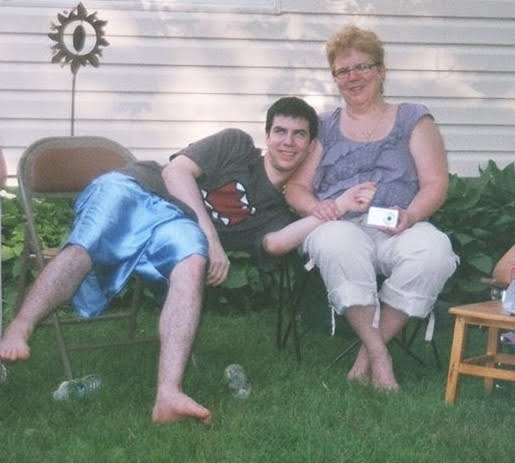
My other son, well, he still isn’t speaking with me. It’s been almost 11 years. So…could it be related to Joseph’s death? I saw him at my mother’s wake and funeral. I said, “Hello, Son;” and he looked like a deer in the headlights. So, I walked away. He stood in for a picture with me, his younger sister, and my granddaughter that his girlfriend took. My eldest daughter didn’t come to either the wake or funeral.

It’s a complicated family. Aren’t most?
I WILL SEE YOU AGAIN

20. MOVE TOWARD YOUR GRIEF, NOT AWAY FROM IT 

  • Our society teaches us that emotional pain is to be avoided, not embraced, yet it is only in moving toward our grief that we can be healed.
  • Of course, it’s also necessary to dose yourself with your grief. Sometimes you will need to distract yourself from the pain. But in general, you should feel that you’re moving toward your grief – toward an understanding and acceptance of it. (HEALING A PARENT’S GRIEVING HEART: 100 PRACTICAL IDEAS AFTER YOUR CHILD DIES; Alan D. Wolfelt, PhD; 2005)

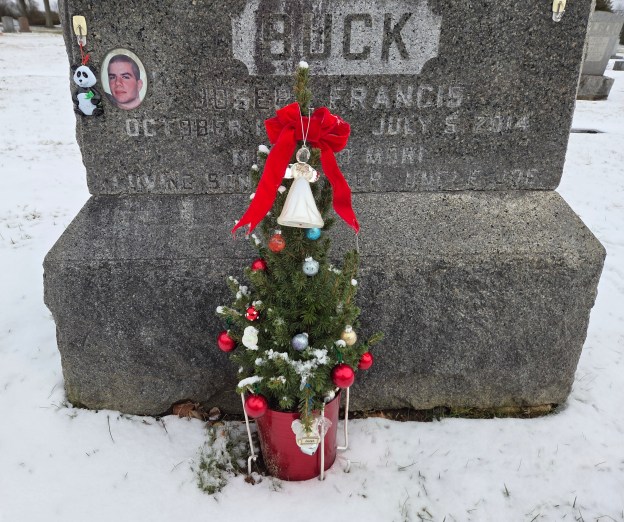
I stopped by the cemetery over the Christmas holidays. Someone had left a little decorated Christmas tree. It was windblown. I straightened it up and smiled. I assume it was left by his dad, or maybe his sister. Someone had also hung a panda ornament from the grave stone. Joseph loved pandas.

I am consciously moving toward my grief, finally. For so long, the trauma of finding him dead, and my guilt as a result, were in the way. I remember that he lived. I am taking time to allow good memories to arise and feel joy in having known him. Yes, he struggled, and I worried about him, but there was so much joy in having had him in my life.

We travelled to Washington, DC, he, his sister and I, to see the baby pandas at the National Zoo when they were kids. I still have the stuffed animals I bought for him there. Recently, my daughter bought supplies for an event at my granddaughter’s high school, and, inexplicably, a toy panda was in the packaging. He finds ways to show us he’s around.

I will be watching something on TV and a memory of him rises up, sometimes, sadly, it’s a scene of someone dying by suicide having used the method he chose. I allow myself the sadness and the tears in remembering. Sitting with them, just with the sadness, not the guilt. Guilt is such a cruel emotion. It can be useful, sure, but sometimes it just wields its blade to cut and hurt. I tell clients, just say, “Hello, Guilt, I see you,” and let it pass. I know how hard that is to do. I will work on giving myself the same grace.

I miss you, Joseph. I wish you would have stayed. Maybe you would have a family now. I would love to see you with your own kids. I think you would have made a wonderful dad. I love you, Son. I will see you again.

EMPTYING

19. FIND WAYS TO UNDERSTAND AND COME TO THE LIMITS OF YOUR GUILT

  • Talk about any lingering feelings of guilt, regret and remorse. Don’t nurse them and continue to punish yourself for them. Instead, give them voice and see how their power over you diminishes.
  • I would be remiss if I did not point out that some parents are in fact partly or wholly responsible for their child’s death, whether it was intentional or accidental. These parents often benefit from professional help in dealing with their overwhelming guilt. (HEALING A PARENT’S GRIEVING HEART: 100 PRACTICAL IDEAS AFTER YOUR CHILD DIES; Alan D. Wolfelt, PhD; 2005)

UGH! What a mixed bag of feelings this brings up. These are only two of the bullet points that appear on the page I read today.

I chuckled when I saw the title. I’d just listened to, and meditated on, the recording for today in the Hallow app’s PRAY40 challenge, a Lenten practice. We were asked to reflect on “What ‘junk’ do you need to remove from your heart this Lent?” My immediate reaction was GUILT! Then I decided to meditate for 20 minutes and see what arose. I saw a black darkness, then the Gollum I mentioned in yesterday’s post. I decided that I need to remove from my heart that image of myself as not good enough, bad, evil – to see myself as God sees me.

So, I was tickled to see “FIND WAYS TO UNDERSTAND AND COME TO THE LIMITS OF YOUR GUILT” at the top of the page. I was reassured by most of the author’s bullet points, especially the first one, noted above, where it says not to nurse feelings of guilt. I thought, great, I can do this, I can unpack the heaviness I carry around with me, cut myself a break.

Then I read the second one noted above…some parents ARE partly or wholly responsible for their child’s death. THAT was like a smack in the face…“You’re not getting out of this THAT easily!!!” 

I didn’t kill Joseph. He killed himself. BUT, he did it after I told him that he could no longer live in my house. I should note here, that he had made several other attempts that were not reactions to anything I said or did. And I know that not everyone will kill themselves because their mom kicks them out of the house.

I participated in an on-line suicide loss group run by David Kessler, another renowned grief loss professional. I got on live with him, one-to-one, and told him my son’s death was my fault and why. He assured me that there were likely other parents who lost a child and blamed themselves for NOT using tough love. So…none of us can help but blame ourselves.

So…IS it partly my fault? I don’t know. I do know that I worked hard at being a parent. I STUDIED to be a parent. I read books, I took courses, I talked to professionals, educators, and friends. I reached out for help wherever I could find it. 

I told him, when he moved back in with me, no alcohol, no drugs. And while I was away, he went out and got his drug of choice and used it. I found the packaging; and, I told him he’d broken our agreement. I told him my heart was broken. 

A part of me believes that he stayed as long as he did for my sake. (Although he had made previous attempts, he either reached out to someone or someone found him in time to save his life.) I think, when I said my heart was broken, it gave him permission to leave.

Another one of my children, not too long ago, after being hospitalized for a psychotic episode, said to me, “The LAST time you told someone they were homeless, they killed themselves. Is that what you want?” I had created a contract for her to return to my home. She didn’t sign it, but I told her that by returning to my home, she had, in fact, agreed to it. I tried to explain to her that I wanted her to be aware of what she needed to do in order to continue living with me, or she would be homeless, and the hospital would have to find her a place to stay. I didn’t get past the word “homeless” before she spat out that comment. She and I had been down this road before and she had lived in a group home for a while. She is back to living on her own and is working again.

So, my guilt over my son’s death is compounded by dealing with ongoing mental illness in my other children…or not dealing with it, because they won’t talk to me. In any case, the worry, and the guilt, remain.

MULTITUDE OF FEELINGS?

17. EXPECT TO HAVE A MULTITUDE OF FEELINGS

  • Grieving parents don’t just feel sad. They often feel numb, angry, guilty, afraid, regretful, confused, even relieved (in cases of chronic or terminal illness, for example). Sometimes these feelings follow each other within a short period of time or they may occur simultaneously. I often say that grief is not experienced as a single note but as a chord.

CARPE DIEM:

Which grief feeling has surprised you most? Make a point

of talking about this feeling with someone today.

(HEALING A PARENTS’S GRIEVING HEART:

100 PRACTICAL IDEAS AFTER YOUR CHILD DIES;

Alan D. Wolfelt, PhD; 2005)

I suppose the feeling I first felt, upon discovering my deceased son, was horror. I don’t know that I could identify feelings after that, at least not immediately. I was split open. I screamed and screamed. No one heard me.

His body was already cold and stiff, and yet, once I reached the 911 operator – it took several attempts – I obeyed her directions. I cut him down and I performed CPR, listening to the air whistling through his clenched teeth, although I knew it was pointless.

Once the officers arrived, I obeyed their direction. I went into the next room, the dining room, and sat in a chair. I suppose I was hyperventilating. An officer stood over me and kept saying, “Calm down. Calm down.” I looked him in the eye, saying nothing, but thinking, “You’ve got to be fucking kidding me.” And yes, like the memes say…never in the history of someone saying “Calm down” has anyone calmed down.

At some point, I went upstairs, and picked the lock to my bedroom to get in. I had locked it so that my son couldn’t open it and get his medication to overdose. He had made a number of attempts before. Of course, I had locked him out of the house as well, but he managed to get back in and found another method.

I sat on my meditation pillow, on the floor, and began praying the Chaplet of the Divine Mercy, a Catholic prayer practice encouraged for the dead and dying. Another officer came upstairs and asked if there was anyone he could  call for me, to get me out of the house. I said no. I wasn’t leaving the house until my son’s body was removed.

At some point, I made some calls. I called each of my other children, as well as my ex-husband. My eldest asked how he did it and hung up when I told her. My number two child was more supportive. He even called back to check on me. Number three didn’t answer, so I left a message to call me back. My ex didn’t answer. I also left a message for a call back. I called a neighbor for support, no answer there either. Left a message. This was late at night. I’d worked the second shift at a psychiatric children’s home. 

I called my parish church and reached the associate, who assured me that the funeral home would be in touch with them to make arrangements. No offer of support or a visit.

I finally ended up calling my ex-partner, who was at work as a police dispatcher over an hour away. He left work and came to be with me, arriving before all the to-do was over. He took me to his apartment and remained with me throughout the ordeal and years after.

I cried non-stop for a long time, throughout the wake and funeral. 

What was I feeling? I was nothing BUT feeling. Horror, sadness, grief, guilt. And, at some point, relief. The fear of losing him was gone, because he was gone. He had a chronic and, ultimately, terminal illness, bipolar depression.

The guilt was the overarching feeling for many years. This year it will be twelve years. It is finally ebbing, somewhat, so that I am able to mourn. I came across a post on one of the survivors of suicide pages I follow on FaceBook. It said, “I would have saved you if I could.” And that gave me a tremendous sense of peace. Yes, Joseph, I would have saved you if I could. I did not want you to die.

BEING HERE NOW

16. BE AWARE THAT YOUR GRIEF AFFECTS YOUR BODY, HEART, SOCIAL SELF AND SPIRIT.

  • Grief is physically demanding. The body responds to the stress of the encounter and the immune system can weaken. You may be more susceptible to illness and physical discomforts. Grieving parents often describe their grief as a pain in the chest or a physical ache. You will probably also feel sluggish or highly fatigued. Some people call this the “lethargy of grief”.
  • The emotional toll of grief is complex and painful. Mourners often feel many different feelings, and those feelings can shift and blur over time. 
  • Bereavement naturally results in social discomfort. Friends and family often withdraw from mourners, leaving us isolated and unsupported. Mourners often feel out of place in a setting they once felt a part of.
  • Mourners often ask, “Why go on living?” “Will my life have meaning now?” “Where is God in this?” Spiritual questions such as these are natural and necessary but also draining. 
  • All four facets of yourself are under attack. You may feel weak and powerless, especially in the early weeks and months. Only over time will you gain the strength to fight back.

CARPE DIEM: 

If you’ve felt physically affected by your grief, see a doctor this week. Sometimes it’s comforting to receive a clean bill of health. (HEALING A PARENT’S GRIEVING HEART: 100 PRACTICAL IDEAS AFTER YOUR CHILD DIES, Alan D. Wolfelt, PhD, 2005)

Usually, I just pick a snippet from the page, but today, all of it grabs my attention. It all rings true for me. It’s a snowy day here in the northeastern US. I’m enjoying being in my nice warm home, with a blanket on my lap, and a cup of tea. My kids would laugh about “my nice warm home”. I keep it at 65 when I’m up and 60 when I’m out or in bed.

Grief certainly is physically demanding. It’s a full-body experience. As my rent heart mends back together, I can finally feel the grief and externalize it into mourning. I could always talk about Joseph’s death, but a part of me still didn’t believe it. I remember at the burial site, standing at the foot of his casket. I didn’t sit with the rest of the mourners. I stood opposite the Deacon, who prayed the final prayers at the head of the casket. We looked into each other’s eyes. “May perpetual light shine upon him…And may his soul and the souls of all the faithful departed, through the mercy of God, rest in peace. Amen.” It was all so unreal.

My friend from Maine had driven me to the funeral home where I met my ex-husband, his wife, and our daughters, to make the “final arrangements”. Just as we were leaving to go there, a Deacon from my church and his wife came to the house. I told Deacon Steve and his wife, Lois, that I had called the rectory the night it happened. His response was, “Where was your community?” If only I had called them directly…The priest I spoke with only told me that the funeral home would call them to make arrangements. 

The funeral director was a lovely man, who had also lost a child. Her portrait hangs in the entryway. I was okay while we sat at the desk in his office…or as okay as I could be. I don’t know that I said anything. When we were led into the showroom to choose a casket, I couldn’t enter the room. I backed out and went outside to be with my friend. I don’t remember if I went back in. It was that sense of unreality. That rending between what was and what I accepted. Again, I say that it is only recently that I believe he is really dead…through the process of working through this book and having been to Dr. Wolfelt’s presentation.

I am always in pain, in most of my body. I have been diagnosed with fibromyalgia, which was basically a rule-out of other diseases. I know, and I teach, that we carry our traumas in our bodies. This is the heaviest of the traumas I have experienced. The burden is made greater by my guilt and all the “what ifs” and “if onlys”. I have participated in various grief groups, in-person and virtually. They have all been helpful in one way or another. The suicide survivor groups have probably been the most helpful and I have made friends through them. No one else understands the depth of this particular loss. We see each other socially as well.

Social situations are very difficult for me. I prefer one-on-one get-togethers. Anxiety and a sense of just not fitting in anymore interferes with going to parties, celebrations, and group events, except for with the survivors, who feel the same way and give comfort to each other as a result of this understanding.

Day to day living can seem pointless at times. Heavy. But I have learned to Be Here Now, again, as Baba Dam Rass would say. There is a sacredness in each moment, each breath.

TODAY, I REMEMBER THAT HE LIVED

11. UNDERSTAND THE SIX NEEDS OF MOURNING

Need #3: Remember the person who died.

  • To heal, parents need to actively remember the child who died and commemorate the life that was lived. (Alan D. Wolfelt, PhD, HEALING A PARENT’S GRIEVING HEART: 100 PRACTICAL IDEAS AFTER YOUR CHILD DIES, 2005)

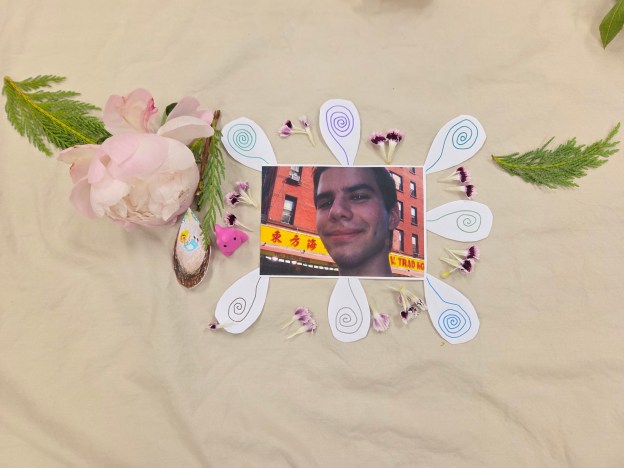
Thursday, October 16, was Joseph’s birthday. He would have turned 34 years old. 

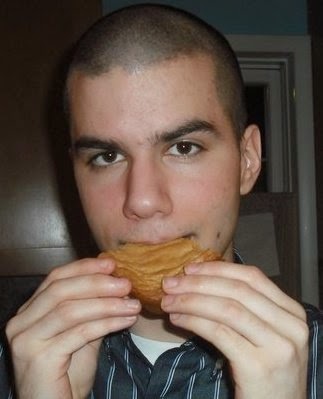
Joseph liked to bake blondies, butterscotch brownies. I still wear a white zippered hoodie that belonged to him, when it is chilly in the house. I still have a signed cast from one time he broke a bone in his hand. He did that a few times…punching the floor, punching a wall…and hitting a beam, punching a heavy sandbag.

I still call his bedroom “Joseph’s room”, except for the few times my grandchildren (actual and “adopted”) lived in it. I still make the bed with his comforter. I just switched it up from the blue one he used as an adult to the Harry Potter one he used as a kid. He introduced me to Harry Potter. I still have books Three through Seven. We had taken the first and second ones out of the library, so I don’t own those; although, I keep looking at used book sales hoping to pick them up. I own all of the movies related to those books – some on VHS, some on DVD. I have done a marathon, watching them when I was home sick. I bought an old TV with a built-in VHS player at Goodwill for $8.99. I have other movies and shows on VHS as well.

As I write this, I am looking at school photos of all of my kids that are hanging in my living room. For the eldest, there is a photo of her shaking hands with the Dean at her college graduation. For the middle two, there are high school graduation photos; although, they have both also graduated from community college. Number three will graduate with her Bachelors next spring; and, her daughter will graduate from high school. For Joseph there is a photo from his junior year in high school. He didn’t graduate. I was tired of going to high school, for my kids. At the end of his junior year, Joseph didn’t have enough credits to move on to his senior year. I signed him out. I was done. He aced the test for his GED. He was extremely bright. That wasn’t the problem. Last year, for the tenth anniversary of his death, I reached out to the community college he had been attending. Although he hadn’t graduated, he had enough credits to do so. I was able to reach someone who followed up for me and the college issued an honorary Associates degree for him.

One summer, as a kid, he attended a computer camp at the community college. When I went to pick him up one day, the teacher came up to me and told me that he had been teaching the kids how to program their computers to play a musical scale. Joseph wrote a program to play Beethoven’s “Ode to Joy”. 

Joseph liked cinnamon-dusted apple cider donuts from Delicious Orchards, a farm market in our area. One time, when he was living with his sister, I picked some up and dropped them off for him. I don’t go there often, but when I do, I still want to pick them up for him. 

FIRST NEED OF MOURNING

8. UNDERSTAND THE SIX NEEDS OF MOURNING

Need #1: Acknowledge the reality of the death.

  • Your child has died. This is probably the most difficult reality in the world to accept. Yet gently, slowly and patiently you must embrace this reality, bit by bit, day by day. (Alan D. Wolfelt, PhD, HEALING A PARENT’S GRIEVING HEART: 100 PRACTICAL IDEAS AFTER YOUR CHILD DIES, 2005)

Eleven years later and there is still a part of me that does not acknowledge that Joseph, my son, is dead. Even though I found him. Even though I…as instructed by the 911 operator I finally reached after multiple attempts…cut down his cold stiff body and futilely administered CPR. A part of me still does not believe he is dead. 

A shift occurred inside of me at that moment. When I walked through the front door and saw him, I screamed and screamed. I dropped whatever I was holding. I went looking for my home phone, pacing around. Some part of me knew that when I called 911 it needed to be from my landline, so they knew where the call was coming from. I dialed and got no answer, twice. The third time someone finally answered. 

That shift? This is not Joseph. That shell? No, that was not Joseph. That whistling sound coming through his locked teeth as I administered compressions? That was not coming from my boy. My boy was gone. His spirit had flown away and this empty shell was not him.

My boy. Yes, he was 22 years old, but he will always be my boy. My boy. My brilliant, beautiful, stinky boy. My boy, who gave the best, tightest hugs. My boy, with a delightful sense of humor. Once, when he came home from a day at a partial care program, he asked me how I would describe him in one word. I immediately said, “Delightful”. He said, “Really?” How did he not know? How did he not know how much I delighted in his being? How did I not communicate that to him? 

We did not talk much. He had returned to my home after living with his sister, rehab stays, including out of state, and hospitalizations. He had been discharged from a residential program because he was not attending school as required. They dropped him off at a Dunkin Donuts until the shelter he was scheduled to go to opened. He spent the night in the shelter, awake, due to his ongoing anxiety issues, which was why he was not making it to school. He showed up at my door the next night, smelling like alcohol. I had been asleep. Of course, I let him in. He lay down on top of the covers next to me. I tossed a throw blanket over him. A year went by. He spent most of his time in his room on his computer, which he built himself. As I said, he was brilliant.

We went out to eat one night that last week. Again, neither of us said much. Looking back, he seemed subdued, but so was I. 

Then I found he was using DXM again; and, I told him he could no longer stay. Well, he did not stay. DAMMIT! 

He is gone. My beautiful, delightful, stinky boy. Buried in the cold ground.

It was him. 

BE COMPASSIONATE WITH OTHERS

6. BE COMPASSIONATE WITH YOUR SPOUSE

  • Someone else is grieving this death as deeply as you are. Unless you are widowed or a single parent, the child’s other parent is also mired in grief. Be as compassionate and nonjudgmental as you can be about your partner’s reactions to the death. Give each other permission to mourn differently. (Alan D. Wolfelt, PhD, HEALING A PARENT’S GRIEVING HEART: 100 PRACTICAL IDEAS AFTER YOUR CHILD DIES, 2005)

I was tempted to skip this activity as I do not have a spouse, nor did I have one at the time of my son’s death; but, there are things I can explore here. The night my son died, I called his father and his siblings. I left messages for his dad and one sister to call me back. I reached one sister, who asked how he died and hung up when I told her. I reached his brother, who called me back a couple of times to check on me. I called a neighbor, looking for some kind of support, someplace to go, and left a message there too. I called my parish priest, who told me the funeral home would get in touch with them to make arrangements…no offer to come to my home, which was what I was hoping for, I guess. I was unable to ask for it. Granted it was midnight, but still…I called my dearest friend, Elizabeth, who lived in Maine, and she said she would head down in the morning. Finally, I reached out to my ex-boyfriend, John, who was at his job as a police dispatcher, an hour away. He dropped everything and came to the house. The police asked if I wanted them to get me when he arrived, so I could leave. I did not want to leave until Joseph’s body was gone. Elizabeth called back and said she was on her way. She could not sleep.

Once all the police activity was over and the body removed, John took me to his apartment, where I spent the night. I did not think I would ever be able to return to my house. The next morning, my younger daughter called me. She had gotten the news from her siblings, I guess. John and I went to her apartment. I was expecting my kids, my ex-husband and all of his family, especially his mother, to blame me. After all, I blamed myself. When we arrived at my daughter’s apartment, she took me by the hands, looked me in the eyes and said, “It’s not your fault; and, you’re going to need a lot of therapy.” My ex-husband came over and he was gracious to me as well. I felt some relief. 

Finally, I was ready to go home. When John and I arrived at the house, Elizabeth was waiting in the driveway. That is the way our friendship was. (Side note:  Once we met in Massachusetts; she drove from Maine, I from New Jersey. She pulled into the hotel drive right behind me.) She stayed for a few days, while we got through the arrangements. My sister came and stayed with me for a few days after that. John stuck by me throughout; and, we rekindled our relationship for a time. I crashed and burned almost three years later for a period of about nine months (gestational correlation?). Our relationship did not survive. He and I did not talk about grief. I do not really know how he was impacted. When I would have periods of wailing, weeping and moaning, it made him uncomfortable. I remember once, after watching “The Passion” and identifying with Mary’s loss of her Son, kneeling on the floor on the spot where I had laid Joseph’s body, wailing. He left the room. That is not to say that there were not times that he did, indeed, comfort me. Sadly, I was completely oblivious to how Joseph’s loss affected him.

I was in shock, traumatized. I think I am finally coming out of the shock, more than eleven years later, which is why I am willing to do this work now.

GRIEF VS MOURNING

UNDERSTAND THE DIFFERENCE BETWEEN GRIEF AND MOURNING

  • Grief is the constellation of internal thoughts and feelings we have when someone loved dies. Grief is the weight in the chest, the churning in the gut, the unspeakable thoughts and feelings.
  • Mourning is the outward expression of grief. Mourning is crying, journaling, creating artwork, talking to others about the death, telling the story, speaking the unspeakable.
  • Everyone grieves when someone loved dies, but if we are to heal, we must also mourn.

CARPE DIEM:

Ask yourself this: Have I truly been mourning the death of my child or have I restricted myself to grieving? (Alan D. Wolfelt, PhD, HEALING A PARENT’S GRIEVING HEART: 100 PRACTICAL IDEAS AFTER YOUR CHILD DIES, 2005)

Ugh…by this definition, it would appear that I have done both. But, sometimes, I feel like I have done neither. Sometimes I feel like it is all wrapped up in unresolved trauma. Sometimes I feel stuck and isolated and alone. Sometimes I live life like I am okay. Other times, I stay home, with the door closed, and have no contact with the outside world, and listen to the negative committee that lives in my head telling me it is all my fault. The fact that I have two other children who do not talk to me feeds my guilt and sense of worthlessness.

In my friendships and work life, I get lots of positive feedback and love, but that negative committee in my head tells me they have never lived with me. They do not truly know me. If they did, they would see the Gollum (see Lord of the Rings) that lives inside me and know how truly evil I am. Nobody can be harder on me than me…except maybe my kids. 

So, today, I will get out of the house and leave the negative committee home. I will see if my friend, who has dementia and truly appreciates my visits, is up for company.

SURVIVING

In my neck of the woods, there is an organization called Stephy’s Place (https://www.stephysplace.org/sp/). It’s a support center for those who grieve. Last night they sponsored a talk by Alan Wolfert, PhD, of the Center for Loss & Life Transition  (https://www.centerforloss.com/). I attended. 

Before the talk, I picked up a couple of his books. The one I’m using for my renewed attempt to regularly write this blog, starting today, is entitled, “Healing a Parent’s Grieving Heart: 100 Practical Ideas After Your Child Dies”. My son, Joseph, died by suicide 11 years ago, July 5, 2014. He would have turned 34 this month, which is probably why I am feeling the ”urge for going”…(https://youtu.be/ZvSvTRhAJxg?si=jNr174FC02Brv7rF).

So…excerpt:

KNOW THAT YOU WILL SURVIVE 

Many newly bereaved parents also struggle with feeling they don’t want to survive. Again, those who have gone before you want you to know that while this feeling is normal, it will pass. One day in the not-too-distant future you will feel that life is worth living again. For now, think of how important you are to your remaining children, your partner, your own parents and siblings, your friends. (Wolfelt, 2005)”

I am not “newly bereaved” but I still struggle, at times, with feeling like I don’t want to survive. At those times,I don’t see my importance to anyone. Two of my surviving three children don’t speak to me. I have no partner. My last surviving parent, my mom, died in January. My siblings…we’ve never been close…although I do talk to one brother and my sisters from time to time. My closest friend died in 2020. I do have other friends, one is struggling with dementia. I have a couple of support groups I attend sporadically.

I get most of my self-worth from work. When I’m engaged in work…I am a Licensed Clinical Social Worker, by the way…I am in the flow. I love helping people. I am semi-retired now, taking assignments from time to time. I’m considering an assignment for a school-year position 10 hours from home…that “urge for going” working on me.
But…I have survived eleven years. I will continue to survive. I am hoping this exercise results in exorcise of the demons within.