Tag Archives: loss

THERE IS NO MEANING

12. UNDERSTAND THE SIX NEEDS OF MOURNING

Need #5: Search for meaning

  • “Why?” questions may surface uncontrollably and often precede “How?” questions. “Why did this happen?” comes before “How will I go on living?”

CARPE DIEM:

Write down a list of “why” questions that have surfaced for you since the death. Find a friend or counselor who will explore these questions with you without thinking she has to give you answers. ( HEALING A PARENT’S GRIEVING HEART: 100 PRACTICAL IDEAS AFTER YOUR CHILD DIES, Alan D Wolfelt, PH.D., 2005)

I didn’t ask why then; and, I don’t ask why now. I believed I knew. I believed and continue to believe it was my fault. Oh, there’s a part of me that gives him the dignity of making his own choice, but if I hadn’t told him that day that he had to move out…If I hadn’t told him, “My heart is broken”…he would still be here.

I didn’t and don’t blame God. As a matter of fact, in a spiritual direction session, I asked Jesus where he was when Joseph died. He told me he was here with him. I saw Joseph walk right into his arms and say to Jesus, “You ARE real!” 

For that I am grateful. 

The “Why?”s I do have include: 

“Why did God give me not one but THREE mentally ill children?” 

“What was he thinking?” 

I thought I did a good job raising them. No, I didn’t. I struggled and judged myself. But I worked so hard at it. I STUDIED to be a mother. I didn’t feel I had any “mother’s intuition”. I had NO IDEA how to be a parent. I read and reread the Gesell books with each of my four children, Birth to One Year, Your One Year Old, Your Two Year Old, etc…Between Parent and Teenager. I read Parent Effectiveness Training. I took trainings. I reached out for all the help I could get. 

I thought I was doing them a favor by letting them be who they were. Now I wonder. Nah. I still believe letting our children be who they are is best…a gift.

I remember, when they were young, thinking “I don’t know what I would do if I had special needs children.” Well, most of them were, are, special needs. It just all seemed normal to me having grown up in my family. 

Joseph had made multiple suicide attempts before he died. I believe my comment, “My heart is broken,” after discovering he had been using again, released him. Maybe he held on so long because he knew I couldn’t handle it if he died. Maybe that comment made him think I’d be better off without him. Who knows?

I AM STILL JOSEPH’S MOTHER

11. UNDERSTAND THE SIX NEEDS OF MOURNING

Need #4: Develop a new self-identity

  • You have gone from being a parent to a “bereaved parent”. You thought of yourself, at least in part, as your child’s mother or father. Even if you have other children, this perception of yourself has changed. If the child who died was your only child, you may wonder whether you are still a parent at all.

CARPE DIEM:

Write out a response to this prompt:  I used to be . Now that

died, I am . This makes me feel . Keep writing as long as you want.

I didn’t “used to be” anything. I am still Joseph’s mother. For a time after his death, eleven years ago, I may have filled in this blank differently. No. No, I wouldn’t. Likely, I wouldn’t have filled it in at all. I couldn’t. It was too raw.

I remember, shortly after his death, sitting in my therapist’s office and asking him, “What do I say when someone asks me how many children I have?” I am past that now. I answer, “Four”. I gave birth to four children, regardless of how many still inhabit this earth. When I am asked their ages, I respond differently depending on who is asking, and why. Sometimes the conversation is easy. Someone is genuinely interested; and, I will respond fully, saying Joseph died. If they ask how, I tell them.

I find that, sometimes, when I share that he died by suicide, people have experienced their own suicide losses. Sadly, it is not all that uncommon.

EMBRACING THE PAIN

9. UNDERSTAND THE SIX NEEDS OF MOURNING

Need #2: Embrace the pain of the loss

  • This need requires mourners to embrace the pain of their loss – something we naturally don’t want to do. It is easier to avoid, repress or push away the pain of grief than it is to confront it. (Alan D. Wolfelt, PhD, HEALING A PARENT’S GRIEVING HEART: 100 PRACTICAL IDEAS AFTER YOUR CHILD DIES, 2005)

I am suddenly struck by how ludicrous the second part of the title of the above-referenced book is…”Practical Ideas After Your Child Dies”??? Seriously? What is practical after your child dies? I cast no aspersions against Dr. Wolfelt here. I heard him speak. He is full of compassion. I am keenly aware that being struck this way, in this moment, is more likely avoidance on my part. Not that I haven’t and don’t continue to embrace the pain of the loss of my son. It’s just that suddenly, I am being bombarded with multiple memories of how I have and have not dealt with the pain of losing him. 

At first, I was cleaved in two, like a sword split me open. I was all raw emotion, crying endlessly. There was no solemnity in my grief at his wake. I cried throughout, falling into the arms of whoever came up to me to share their condolences. Well, except for two people that I can think of. One who actually came up to me and asked, “What happened?”, which was beyond my capacity to respond to at the time. The other was someone with whom I had worked. Someone who used my name to get the job even though we had met only once, briefly. Someone who treated our staff like pawns on a chess board, moving them around at her will. Someone through whom I ultimately left said job. When I saw her, I was in the arms of a former professor. I said to her, “I can’t believe that bitch had the nerve to show up here”, or something to that effect. She suggested I greet the woman and come back to her. I stiffly reached out a hand to shake, listened to some platitudes, and again hugged my professor. I am so grateful to her for that. And the tears resumed.

At the funeral Mass, I cried constantly, falling to my knees and sobbing out loud at one point.

I had a hard time going back to work. Then I embraced positions in suicide prevention like I could stop it from ever happening again. No one was ever going to die by suicide on my watch. 

The first time I walked in an AFSP Out of the Darkness Walk, I dissociated and separated from my family group, walking in the other direction. I don’t know if they realized I was missing. Before the walk started, we had each held a balloon upon which we had written our loved one’s name. Then we let them go. I held on to mine for a long time. I couldn’t let it…him…go. I was overwhelmed by the sheer number of attendees. All of those people who had lost someone to suicide. 

I participated in another walk years later. A friend walked with me. My daughter, who volunteers with AFSP, introduced me to another griever who walked with us. She, too, has become a friend. This year I walked with her and a few other folks from my Survivors of Suicide group. As I write this, I realize I missed our monthly meeting last night. It completely slipped my mind. There’s a social gathering of the group this weekend. I may go to that.

So…embracing the pain…yeah…I do that…involuntarily. It sneaks up on me.

COMPASSION FOR MY CHILDREN

7. BE COMPASSIONATE WITH YOUR SURVIVING CHILDREN

  • Grieving siblings are often “forgotten mourners”. This means that their parents and family as well as friends and society tend to overlook their ongoing grief or attempt to soothe it away.

CARPE DIEM: 

Hold a family meeting and talk to your children about their feelings since the death. Even if the death wasn’t recent, you may uncover lingering resentments, fears and regrets. Expressing these feelings may help bring your family closer together. (Alan D. Wolfelt, PhD, HEALING A PARENTS’S GRIEVING HEART: 100 PRACTICAL IDEAS AFTER YOUR CHILD DIES, 2005)

Sadly, it was a long time before I could look around and see how Joseph’s death affected my children. My youngest daughter is actively involved with the American Foundation for Suicide Prevention (https://afsp.org/). She is on the Board in our state and is their Social Media Ambassador, with a team of volunteers. She is very open, publicly, about how her brother’s death affected her. On the anniversary of his death, for the past few years, she, her daughter, and I have been going to the beach to watch the sun rise. Afterward, we go to breakfast. One year we threw flowers into the ocean. Another, shells marked with the names of others’ lost loved ones, from an Out of the Darkness Walk (https://afspwalks.donordrive.com/OOTDWalks). We talk about Joseph a lot, but I can’t say that we talk about our feelings. Our relationship has had its ups and downs. She was able to share with me some of the resentments she had toward me that had nothing to do with Joseph. I was able to apologize. Our relationship has gotten better. There is still room for improvement.

My eldest daughter has her own mental health struggles and carries a lot of resentment toward me. We have not had a conversation about it. She has levelled some pretty nasty words toward me. In the hospital emergency room last year, she told me to leave the room when the screener asked her if she would be admitted voluntarily. She then asked her husband to have me come back in and said to me, “My mother is fucking up my life again.” When she came home and I tried to explain to her how, by having the hospital staff give her the contract I drew up for her return to my home, my intention was to tell them she was homeless if she would not agree. Before I could finish my explanation, which was that the hospital would then have to find her an appropriate supportive place to stay, she looked me dead in the eye and said, with venom, “The last time you told someone they were homeless, they killed themselves. Is that what you want?”

When I later recounted this experience to her sister, she looked at me, shrugged and nodded. I remember her saying, “Well, yeah”, but that may just have been my impression from the nod and the shrug.

My other son, well, he has not spoken to me in ten years. Our last conversation was on Mother’s Day 2015, the year after Joseph’s death. I was having a tough day. I had not heard from any of my children, so when he called, I was crying. Trying to hide that fact from him, when he said, “Happy Mother’s Day…ok, gotta go”…or something like that, I said, “Okay”. He sounded surprised; and, we did hang up. If I remember correctly, I then went to the cemetery, where I found my younger daughter and granddaughter. I walked to the grave, crying, and my daughter hugged me. (I could be confusing this day with another…) 

I saw my son sometime after that at my granddaughter’s First Holy Communion. I may have put my hand on his shoulder as I passed him in the pew on my way to receive communion myself. At the end of the Mass, he was gone. The family went out to eat, but I went home. It was just too difficult.

My mother passed away in January, and I saw him at the wake and funeral. I met his girlfriend for the first time and gave her a hug. I said, “Hello, Son” to him. He looked like a deer in the headlights, eyes shifting back and forth. I just walked away, giving him space. I saw him again the next day, at the funeral. I gave him an icon I bought for him in Fatima, Portugal, and had blessed by the Archbishop for the Military. Again, I walked away. We did not sit together at the repast, but he stood with my younger daughter, granddaughter and me for a photo his girlfriend took. She sent me a copy. I am grateful.

So…sitting down for a family meeting with my children for a discussion of our feelings about Joseph’s death, or about anything, is out of the question for now. Maybe someday.

GRIEF VS MOURNING

UNDERSTAND THE DIFFERENCE BETWEEN GRIEF AND MOURNING

  • Grief is the constellation of internal thoughts and feelings we have when someone loved dies. Grief is the weight in the chest, the churning in the gut, the unspeakable thoughts and feelings.
  • Mourning is the outward expression of grief. Mourning is crying, journaling, creating artwork, talking to others about the death, telling the story, speaking the unspeakable.
  • Everyone grieves when someone loved dies, but if we are to heal, we must also mourn.

CARPE DIEM:

Ask yourself this: Have I truly been mourning the death of my child or have I restricted myself to grieving? (Alan D. Wolfelt, PhD, HEALING A PARENT’S GRIEVING HEART: 100 PRACTICAL IDEAS AFTER YOUR CHILD DIES, 2005)

Ugh…by this definition, it would appear that I have done both. But, sometimes, I feel like I have done neither. Sometimes I feel like it is all wrapped up in unresolved trauma. Sometimes I feel stuck and isolated and alone. Sometimes I live life like I am okay. Other times, I stay home, with the door closed, and have no contact with the outside world, and listen to the negative committee that lives in my head telling me it is all my fault. The fact that I have two other children who do not talk to me feeds my guilt and sense of worthlessness.

In my friendships and work life, I get lots of positive feedback and love, but that negative committee in my head tells me they have never lived with me. They do not truly know me. If they did, they would see the Gollum (see Lord of the Rings) that lives inside me and know how truly evil I am. Nobody can be harder on me than me…except maybe my kids. 

So, today, I will get out of the house and leave the negative committee home. I will see if my friend, who has dementia and truly appreciates my visits, is up for company.

I KNOW I’M NOT ALONE

Excerpt:

2. KNOW THAT YOU ARE NOT ALONE

You are not alone. In the United States alone, more than 100,000 children die each year. (In other, less fortunate countries, of course, this number is staggeringly higher.) This number does not include miscarriages and stillbirths. Countless more adult children die; consider that most people who die in their fifties or younger leave behind a surviving parent. If you add up these numbers and consider all the children who have died in the last two decades, this means that literally millions of other parents are grieving the death of a child. (Alan Wolfelt, PhD, HEALING A PARENT’S GRIEVING HEART, 2005)

The support groups I participate in are not specifically for parents, but there are parents among the members. One is for clinicians who have lost a family member to suicide. As clinicians, we are not immune from child loss by suicide. 

I used to participate in my county’s Traumatic Loss Coalition before I lost my son. We responded to traumatic losses in our communities (https://ubhc.rutgers.edu/education/trauma-loss-coalition/overview.xml). I realized, responding after I lost him, that it was retraumatizing for me, and I dropped out. Someone at one of the regular meetings once said that, knowing me, he was surprised that I lost my son this way. Being a clinician does not always guarantee that we say the right things. 

The other support group is for survivors of suicide loss, again, not specific to parents, but there are other parents among us. Sometimes people tell their stories with specifics to the method of death; and, they want to hear specifics of other’s experiences. I do not find this helpful, but, again, retraumatizing. It brings back memories of the night I found my son. I still go back there from time to time. I do not need reminders from others. I have, though, actually presented, to a group in a Counseling class, the details of that night. I asked them to close their eyes and go with me. The professor, my dear friend, was available to meet with anyone affected by the presentation, and I offered Reiki (energy healing) to those I suspected were being activated.

There was a group for mothers that met three times a year, but it faded away. I consider starting one again, but I still have work to do before I can do that.

Resources given by Dr. Wolfelt:The Compassionate Friends is the largest organization of grieving parents and its chapters hold support groups in hundreds of communities across the United States. Visit them on the web at www.compassionatefriends.org. Bereaved Parents of the USA (www.bereavedparentsusa.org) is another growing and reputable organization. For parents who have no surviving children, a group called Alive Alone (www.alivealone.org) may offer valuable assistance. (Wolfelt, 2005)

SURVIVING

In my neck of the woods, there is an organization called Stephy’s Place (https://www.stephysplace.org/sp/). It’s a support center for those who grieve. Last night they sponsored a talk by Alan Wolfert, PhD, of the Center for Loss & Life Transition  (https://www.centerforloss.com/). I attended. 

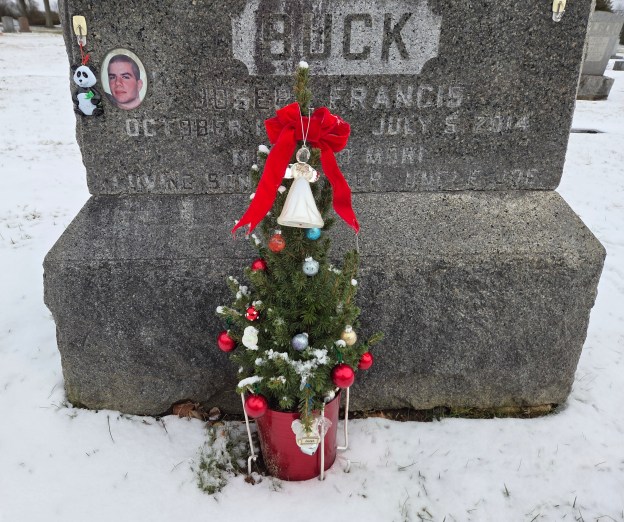
Before the talk, I picked up a couple of his books. The one I’m using for my renewed attempt to regularly write this blog, starting today, is entitled, “Healing a Parent’s Grieving Heart: 100 Practical Ideas After Your Child Dies”. My son, Joseph, died by suicide 11 years ago, July 5, 2014. He would have turned 34 this month, which is probably why I am feeling the ”urge for going”…(https://youtu.be/ZvSvTRhAJxg?si=jNr174FC02Brv7rF).

So…excerpt:

KNOW THAT YOU WILL SURVIVE 

Many newly bereaved parents also struggle with feeling they don’t want to survive. Again, those who have gone before you want you to know that while this feeling is normal, it will pass. One day in the not-too-distant future you will feel that life is worth living again. For now, think of how important you are to your remaining children, your partner, your own parents and siblings, your friends. (Wolfelt, 2005)”

I am not “newly bereaved” but I still struggle, at times, with feeling like I don’t want to survive. At those times,I don’t see my importance to anyone. Two of my surviving three children don’t speak to me. I have no partner. My last surviving parent, my mom, died in January. My siblings…we’ve never been close…although I do talk to one brother and my sisters from time to time. My closest friend died in 2020. I do have other friends, one is struggling with dementia. I have a couple of support groups I attend sporadically.

I get most of my self-worth from work. When I’m engaged in work…I am a Licensed Clinical Social Worker, by the way…I am in the flow. I love helping people. I am semi-retired now, taking assignments from time to time. I’m considering an assignment for a school-year position 10 hours from home…that “urge for going” working on me.
But…I have survived eleven years. I will continue to survive. I am hoping this exercise results in exorcise of the demons within.