Tag Archives: love

FIRST NEED OF MOURNING

8. UNDERSTAND THE SIX NEEDS OF MOURNING

Need #1: Acknowledge the reality of the death.

  • Your child has died. This is probably the most difficult reality in the world to accept. Yet gently, slowly and patiently you must embrace this reality, bit by bit, day by day. (Alan D. Wolfelt, PhD, HEALING A PARENT’S GRIEVING HEART: 100 PRACTICAL IDEAS AFTER YOUR CHILD DIES, 2005)

Eleven years later and there is still a part of me that does not acknowledge that Joseph, my son, is dead. Even though I found him. Even though I…as instructed by the 911 operator I finally reached after multiple attempts…cut down his cold stiff body and futilely administered CPR. A part of me still does not believe he is dead. 

A shift occurred inside of me at that moment. When I walked through the front door and saw him, I screamed and screamed. I dropped whatever I was holding. I went looking for my home phone, pacing around. Some part of me knew that when I called 911 it needed to be from my landline, so they knew where the call was coming from. I dialed and got no answer, twice. The third time someone finally answered. 

That shift? This is not Joseph. That shell? No, that was not Joseph. That whistling sound coming through his locked teeth as I administered compressions? That was not coming from my boy. My boy was gone. His spirit had flown away and this empty shell was not him.

My boy. Yes, he was 22 years old, but he will always be my boy. My boy. My brilliant, beautiful, stinky boy. My boy, who gave the best, tightest hugs. My boy, with a delightful sense of humor. Once, when he came home from a day at a partial care program, he asked me how I would describe him in one word. I immediately said, “Delightful”. He said, “Really?” How did he not know? How did he not know how much I delighted in his being? How did I not communicate that to him? 

We did not talk much. He had returned to my home after living with his sister, rehab stays, including out of state, and hospitalizations. He had been discharged from a residential program because he was not attending school as required. They dropped him off at a Dunkin Donuts until the shelter he was scheduled to go to opened. He spent the night in the shelter, awake, due to his ongoing anxiety issues, which was why he was not making it to school. He showed up at my door the next night, smelling like alcohol. I had been asleep. Of course, I let him in. He lay down on top of the covers next to me. I tossed a throw blanket over him. A year went by. He spent most of his time in his room on his computer, which he built himself. As I said, he was brilliant.

We went out to eat one night that last week. Again, neither of us said much. Looking back, he seemed subdued, but so was I. 

Then I found he was using DXM again; and, I told him he could no longer stay. Well, he did not stay. DAMMIT! 

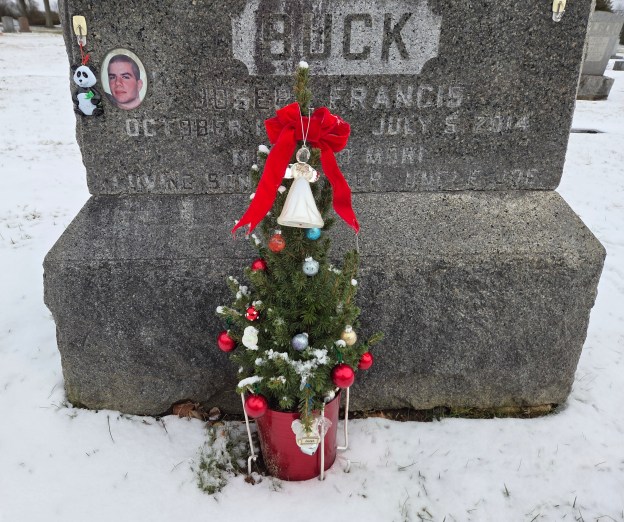
He is gone. My beautiful, delightful, stinky boy. Buried in the cold ground.

It was him. 

BE COMPASSIONATE WITH OTHERS

6. BE COMPASSIONATE WITH YOUR SPOUSE

  • Someone else is grieving this death as deeply as you are. Unless you are widowed or a single parent, the child’s other parent is also mired in grief. Be as compassionate and nonjudgmental as you can be about your partner’s reactions to the death. Give each other permission to mourn differently. (Alan D. Wolfelt, PhD, HEALING A PARENT’S GRIEVING HEART: 100 PRACTICAL IDEAS AFTER YOUR CHILD DIES, 2005)

I was tempted to skip this activity as I do not have a spouse, nor did I have one at the time of my son’s death; but, there are things I can explore here. The night my son died, I called his father and his siblings. I left messages for his dad and one sister to call me back. I reached one sister, who asked how he died and hung up when I told her. I reached his brother, who called me back a couple of times to check on me. I called a neighbor, looking for some kind of support, someplace to go, and left a message there too. I called my parish priest, who told me the funeral home would get in touch with them to make arrangements…no offer to come to my home, which was what I was hoping for, I guess. I was unable to ask for it. Granted it was midnight, but still…I called my dearest friend, Elizabeth, who lived in Maine, and she said she would head down in the morning. Finally, I reached out to my ex-boyfriend, John, who was at his job as a police dispatcher, an hour away. He dropped everything and came to the house. The police asked if I wanted them to get me when he arrived, so I could leave. I did not want to leave until Joseph’s body was gone. Elizabeth called back and said she was on her way. She could not sleep.

Once all the police activity was over and the body removed, John took me to his apartment, where I spent the night. I did not think I would ever be able to return to my house. The next morning, my younger daughter called me. She had gotten the news from her siblings, I guess. John and I went to her apartment. I was expecting my kids, my ex-husband and all of his family, especially his mother, to blame me. After all, I blamed myself. When we arrived at my daughter’s apartment, she took me by the hands, looked me in the eyes and said, “It’s not your fault; and, you’re going to need a lot of therapy.” My ex-husband came over and he was gracious to me as well. I felt some relief. 

Finally, I was ready to go home. When John and I arrived at the house, Elizabeth was waiting in the driveway. That is the way our friendship was. (Side note:  Once we met in Massachusetts; she drove from Maine, I from New Jersey. She pulled into the hotel drive right behind me.) She stayed for a few days, while we got through the arrangements. My sister came and stayed with me for a few days after that. John stuck by me throughout; and, we rekindled our relationship for a time. I crashed and burned almost three years later for a period of about nine months (gestational correlation?). Our relationship did not survive. He and I did not talk about grief. I do not really know how he was impacted. When I would have periods of wailing, weeping and moaning, it made him uncomfortable. I remember once, after watching “The Passion” and identifying with Mary’s loss of her Son, kneeling on the floor on the spot where I had laid Joseph’s body, wailing. He left the room. That is not to say that there were not times that he did, indeed, comfort me. Sadly, I was completely oblivious to how Joseph’s loss affected him.

I was in shock, traumatized. I think I am finally coming out of the shock, more than eleven years later, which is why I am willing to do this work now.